



MEVI2016: Trust in the globalized media
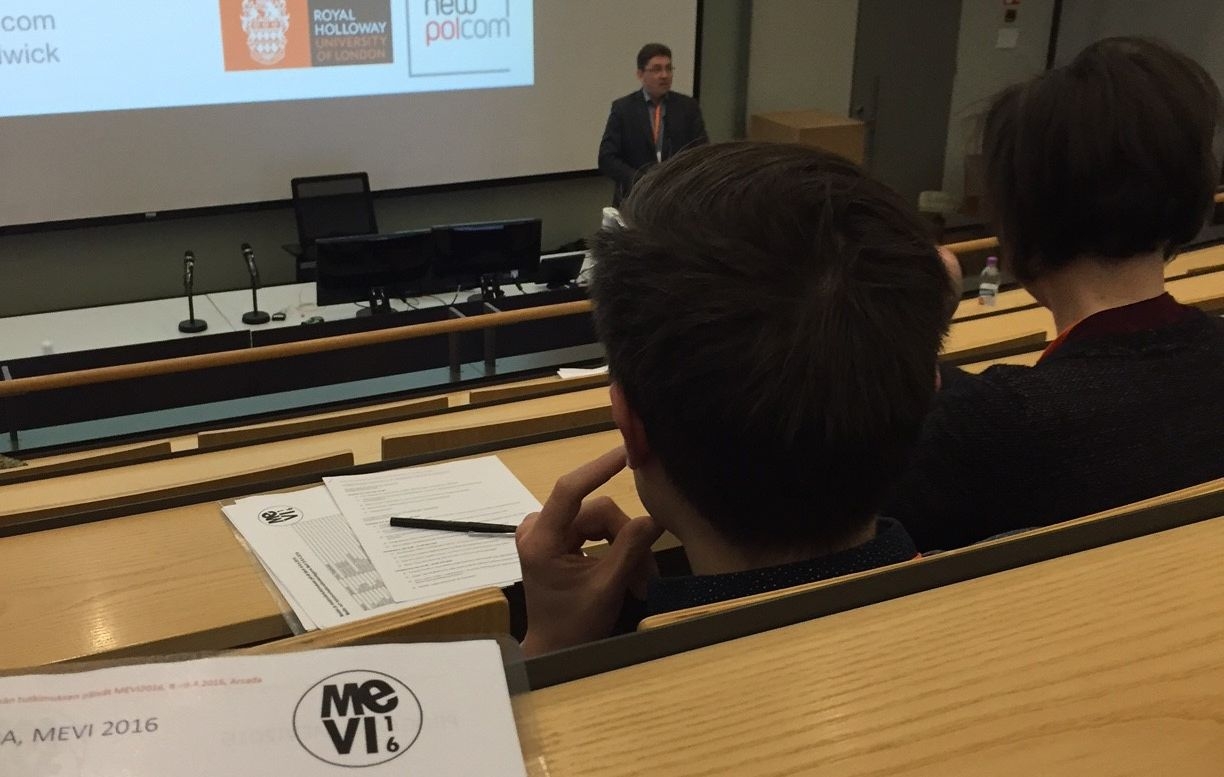
The Finnish Conference for Media and Communication Research began on Friday 8 April. It takes place in Helsinki, Finland and lasts until Saturday afternoon. The conference is themed around trust … Continued


MEVI2016: Trust in the globalized media
The Finnish Conference for Media and Communication Research began on Friday 8 April. It takes place in Helsinki, Finland and lasts until Saturday afternoon. The conference is themed around trust … Continued

Altmetrics, Part I: Tracking research
Altmetrics is a way to measure online attention gained by research. The word derives from alternative (biblio)metrics. Outlined originally in the Altmetrics Manifesto [1], altmetrics have with the developments of … Continued
REPORT: What is happening to television news?
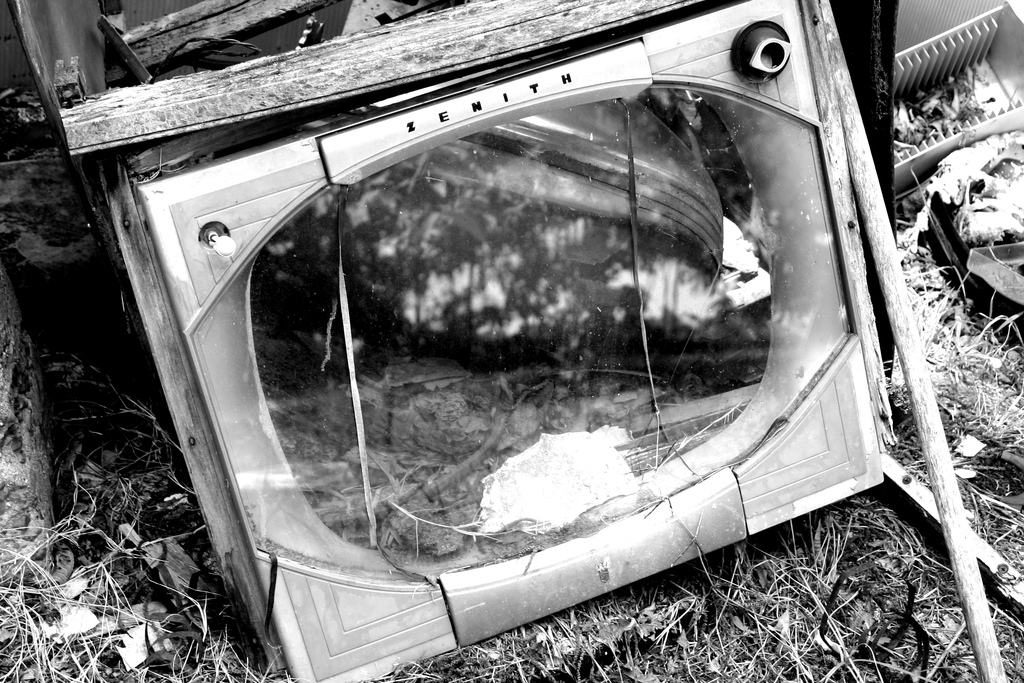
Reuters Institutes for the Study of Journalism has published a report called What is happening to television news?. The report is the fourth piece of Digital News Reports series. Traditional television viewing is … Continued

New issue of NORDICOMs Media Trends newsletter published
New issue of NORDICOMs Media Trends in the Nordic countries newsletter is out now. It provides a collection of news about recent media developments based on reports from a number of Nordic media … Continued
ARTICLE: Journalists are cosmopolitan, journalism is not
Swedish journalists express much more cosmopolitan ideals than what their work practices allow, write Johan Lindell and Michael Karlsson, both of Karlstad University. The authors surveyed 571 Swedish journalists over … Continued

ARTICLE: Reader comments should be seen as journalism
Readers’ contributions posted below online news stories can serve to extend journalism, not just comment on it, writes James Morrison, of Robert Gordon University. The author analysed the reader comments … Continued

ARTICLE: Think tanks increase their influence on media
Independent research institutions, or so called think tanks, are increasing their influence on Danish, Swedish and Norwegian news, recent research points out. A special issue of the journal Politik focuses … Continued

ARTICLE: Three ways journalists adapt sources’ views
Journalists hardly ever adopt the frames offered by their sources into their stories, write Christian Baden and Keren Tenenboim-Weinblatt, both of the Hebrew University of Jerusalem. The authors compared how … Continued
CFP: Digitalization and the media environment
The 8th annual International Media Readings in Moscow conference is looking for paper abstract submissions. The event will take place on the 7th and 8th of November 2016. The conference … Continued

ARTICLE: Science journalism headlines over-the-top
The headlines of science stories are often excessively emotive and exeggeratory, writes Katarzyna Molek-Kozakowska, of Opole University. The author studied the headlines of 400 most-read stories published on the website … Continued
ARTICLE: Photojournalists live in a world of risk
The possibility of being injured or killed in action is one of the most significant risks photojournalists experience, write Adrian Hadland, Paul Lambert, both of University of Stirling, and David … Continued

REPORT: Robo-journalism, ad blocking, and other predictions
Reuters Institute for the Study of Journalism (RISJ) has published a forecast of the digital media trends of 2016. Authored by the Institute’s own Nic Newman, the report covers developments … Continued
BOOK: Female patients, ministers, and emotions in news
A new open access e-book on gender and media has been published by the University of Minho’s Communication and Society Research Centre. The book contains 11 chapters, many of which … Continued
ARTICLE: Swedish press has become more neoliberal
The Swedish press used a more market-oriented, neoliberal discourse in covering an economic crisis in 2011 than in 1977, writes Diana Jacobsson, of Gothenburg University. The author compared the coverage … Continued

REPORT: EU media market is dangerously concentrated
The media market concentration in many European countries is high enough to cause considerable risk to media plurality, a recent study reveals. The Media Pluralism Monitor project’s results from 2015 … Continued
ARTICLE: Journalists as noble anti-heroes
Journalists still portray themselves as a benevolent, but imperfect support cast of the “real heroes”, writes Scott Eldridge II, of University of Sheffield. The author analyzed the way The New … Continued
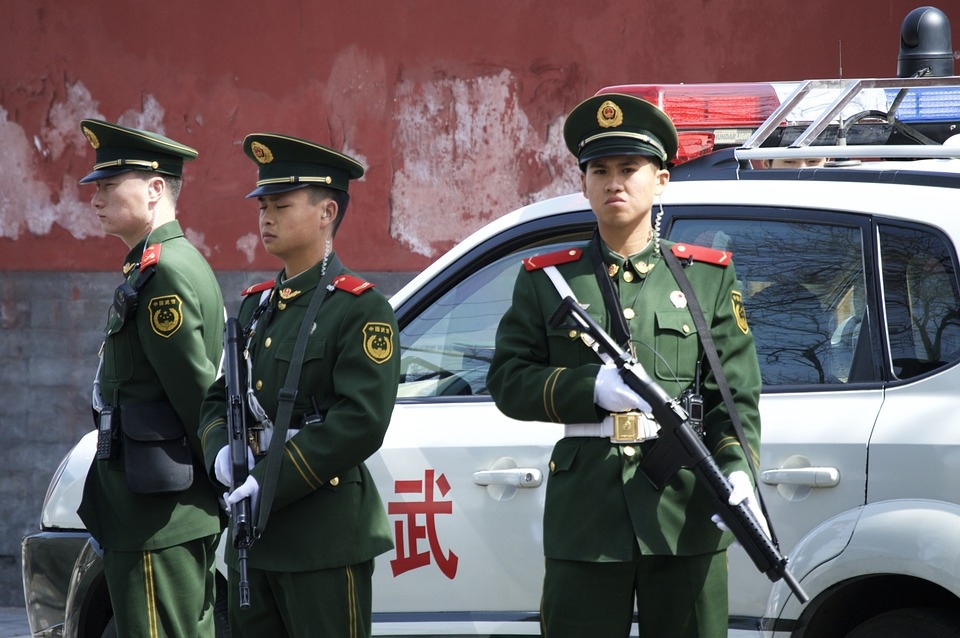
ARTICLE: Inter-journalist connections, China in European press, and others
The journal International Communication Gazette has released its newest issue, which is a special on the relationship between China and the European Union, titled Mass Communication and EU-China Relations. Most … Continued

ARTICLE: Political journalists are in “journalism-centered bubble” on Twitter
So far studies have not explored why and how journalists use social media to follow and interact with one another and what kind of networks emerge through this, write Christian … Continued
REPORT: BBC and YLE lead public service innovation
BBC and YLE are Europe’s leading public service broadcasters for digital innovation, a report by Annika Sehl, Alessia Cornia and Rasmus Kleis Nielsen of Reuters institute for the study of … Continued

ARTICLE: Tweets as the “people’s voice”
The use of Twitter messages as representatives of the popular opinion is both commonplace and problematic, write Kathleen Beckers and Raymond A. Harder, both of University of Antwerp. The authors … Continued
CFP: Ethics and responsibility in journalism
The fourth Understanding Transition conference, this time themed “Ways and Challenges to Responsibility”, is now open to abstract submissions. The event itself will take place on the 2nd and 3rd … Continued

REPORT: UK journalists disproportionately white men
Most (94 per cent) of UK journalists are white, while the proportion of ethnic minorities in the country’s population would warrant for higher representation, a recent study reveals. 700 British … Continued
CFP: Migration and migrants in the media
Prague Media Point Conference, subtitled this year as “Media and Migration”, is now accepting paper abstracts. This year the event serves also as a preconference to the European Communication Research … Continued

ARTICLE: Twitter breaks most cross-media news
Out of all news stories that spread to different media, more originate from Twitter than any other medium, write Raymond A. Harder, Steve Paulussen and Peter Van Aelst, all of … Continued

ARTICLE: Journalists struggle against framing
Framing as a part and parcel of the journalistic process is an uncomfortable thought to journalists, write Jan Boesman and Baldwin Van Gorp, both of KU Leuven. The authors conducted … Continued

ARTICLE: Comments make journalism look bad
The presence of online user comments deteriorates the journalism’s perceived quality, write Fabian Prochazka, Patrick Weber and Wolfgang Schweiger, all of University of Hohenheim. The authors conducted an online experiment … Continued

ARTICLE: Female reporters shape shifting in conflict zones
Women have been reporting on war since the modern definition of the war correspondent came into existence but sexism and gendered practices still exist in the field. Female war reporters use strategy … Continued

ARTICLE: Social network analysis offers new opportunities for research
Media organizations, media content, and audiences are increasingly connected through a variety of media networks, writes J. Sophia Fu. Online news articles have hyperlinks to link to other content and news organizations … Continued

REPORT: Most Brits would turn off ad blockers
Over half of UK residents who use ad blocking software are willing to disable the software, if it was necessary to view the content, a recent study shows. The trade … Continued
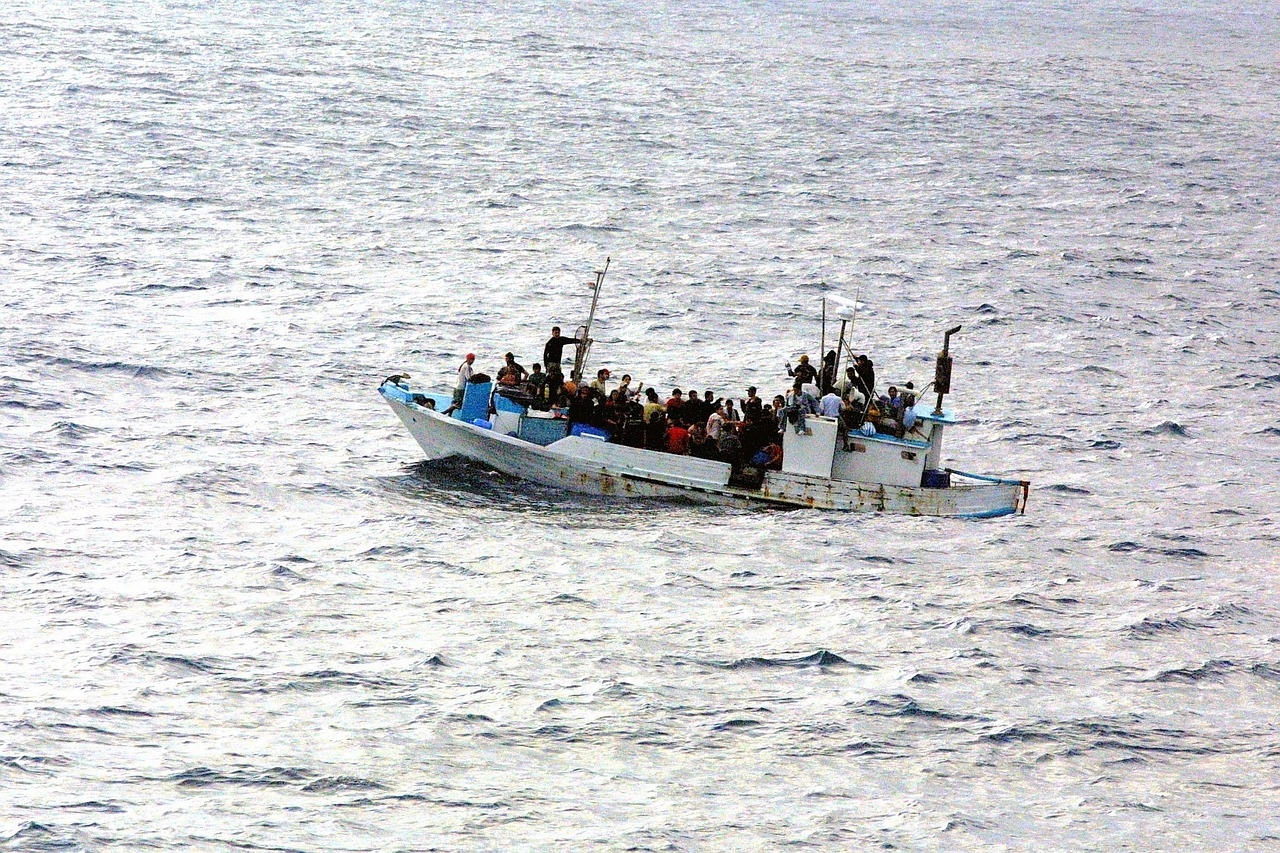
ARTICLE: Spanish newspapers distance immigrants
Spanish newspapers depict immigrants from afar, write Miguel Franquet Santos Silva and Ana Beriain Bañares, both of University Abat Oliba Barcelona, and Elena Real Rodríguez and María del Mar López … Continued