






ARTICLE: Election news do not convert voters
Increased exposure to election news does not cause voters to switch parties, write Sabine Geers, Linda Bos and Claes H. De Vreese, all of University of Amsterdam. The authors analysed … Continued
Trump`s first month through the eyes of political cartoonists
ARTICLE: Election news do not convert voters
Increased exposure to election news does not cause voters to switch parties, write Sabine Geers, Linda Bos and Claes H. De Vreese, all of University of Amsterdam. The authors analysed … Continued
CFP | 1.9. | Changing conceptions of time
A conference entitled “The Mediatization of Time: New perspectives on media, data and temporality” is calling for paper proposals. The event will take place in Bremen, Germany, on the 7th … Continued
ARTICLE: Twitter’s news agenda is set by the elite – not the public
Twitter has agenda setting power over other media, but Twitter’s news agenda is generally set by accounts of political and media actors, write Raymond A. Harder, Julie Sevenans and Peter … Continued
ARTICLE: News tweets affect the stock market
Economic news published on Twitter by the Reuters and Bloomberg agencies cause the Dow Jones Industrial Average stock market index (DJI) to fluctuate, write Nadine Strauß, Rens Vliegenthart and Piet … Continued
On week 20 the following publications have come to our attention: Innovative Journalism in Latin America Edited by Teresa Mioli and Ismael Nafría Published by Knight Center for Journalism in … Continued
ARTICLE: How do podcasts connect with their audience?
Marcus Funk, of Sam Hunt State University, US, has analysed 12 American podcasts to find out how news and community values manifest in them. Some of the podcasts in Funk’s … Continued
CFP | 18.9. | MeCCSA 2018 Conference
The annual conference of the Media, Communication and Cultural Studies Association (MeCCSA) is now accepting contribution proposals. The event will take place between the 10th and 12th of January 2018 … Continued
ARTICLE: Traditional journalism principles in local TV newsrooms
Are traditional journalism principles still alive and well in today’s local TV newsrooms? ask Keren Henderson and Michael Cremedas, both of Syracuse University. The authors surveyed 348 local television journalists … Continued
ARTICLE: Mobile phone footage has not lived up to its early potential
Content generated by mobile phones, video and stills images, were expected to have a revolutionary impact on broadcast journalism in the mid-2000s. Dramatic news events such as the Asian Tsunami and London … Continued
ARTICLE: Provocation narratives introduce political bias in international news
Sandrine Boudana and Elad Segev, both of Tel Aviv University, explore the use of provocation narratives and how those narratives introduce political bias in international news. They aim to demonstrate that … Continued
ARTICLE: Media framing of trolling and online abuse
Karen Lumsden, of Loughborough University, and Heather Morgan, of University of Aberdeen studied the framing of trolling in British newspaper reports. Qualitative document analysis of 175 newspaper reports of trolling from British national … Continued
REPORT: Legal source protection frameworks are under significant strain
UNESCO has released a study of changes that impact on legal frameworks that support protection of journalistic sources in the digital age. The author of the study is Julie Posetti, of University … Continued
In their new article Maria Haigh, Thomas Haigh and Nadine I. Kozak, all of University of Wisconsin-Milwaukee, document the work practices of StopFake, an Ukrainian volunteer fact-checking organization. The authors frame the study within … Continued
ARTICLE: Journalists’ opinions have little effect on story framing
The way journalists perceive global poverty has “little predictive power” over how their stories frame poverty, write Mirjam Vossen and Baldwin van Gorp, both of University of Leuven, with Lau … Continued
ARTICLE: Fans of a losing team “shoot the messenger”
Fans of a losing sports team will perceive news reports of the loss as biased, Youngju Kim and Andrew C. Billings, both of University of Alabama, write. The authors conducted … Continued
CFP | 16.6. | Half a century of BBC’s local radio
A one-day symposium on the BBC’s local radio audiences is calling for paper proposals. The event will be held in Leicester, UK, on the 8th of November 2017. The symposium … Continued
ARTICLE: Journalists value research more than journalism educators do
It is more common for working journalists to think academic research is important to journalism than it is for journalism educators, write John Wihbey, of Northeastern University, and Mark Coddington, … Continued
ARTICLE: On US newspapers, female nipples are bad
American newspapers usually mention the female nipple only in negative connections, write Mary Angela Bock, Paromita Pain and JhuCin Jhang, all of University of Texas at Austin. The authors analysed … Continued
On week 19 the following publications have come to our attention: News of Baltimore: Race, Rage and the City Edited by Linda Steiner and Silvio Waisbord Published by Routledge 272 … Continued
ARTICLE: How the Chinese state brushes aside social problems
The Chinese state media uses ritualistic framing to distract public attention from the social issues related to the annual Spring Festival homecoming, writes Meng Li, of Loyola Marymount University. The … Continued
REPORT: Local newspapers are still strong in Canada
Canadian community newspapers still play an important role in their readerships’ lives, states a recent report by News Media Canada. A representative sample of over 2 400 Canadians was surveyed … Continued
ARTICLE: Peng Liyuan as first First Lady of China
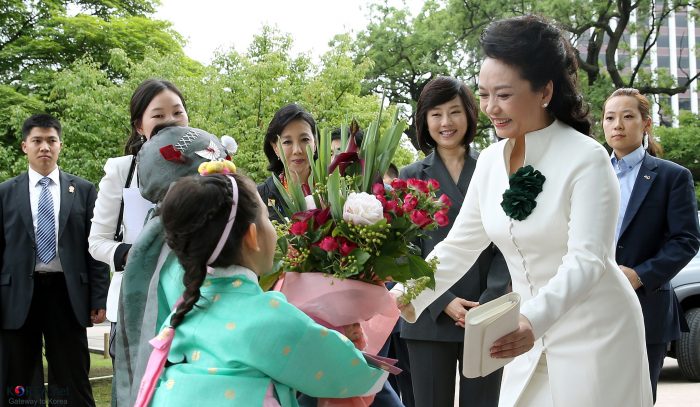
In the Western World, the spouse of a nation’s leader – the First Lady – often receives high visibility as a as a champion of social causes. Before Peng Liyuan, … Continued
ARTICLE: Vietnamese news media trivializes women leaders
Hong Tien Vu, University of Kansas, Hue Trong Duong, University of Georgia, Barbara Barnett, University of Kansas, and Tien-Tsung Lee, of University of Kansas, examine journalists’ perceptions of and attitudes … Continued
REPORT: Journalists suffer violence, intimidation and self-censorship in Europe
A survey by the Council of Europe shows that journalists in Europe are often exposed to serious unwarranted interference in their work, including intimidation and violence. The study is based … Continued
ARTICLE: Eurocentric concept of revolution cannot explain the Arab Spring event
Petra Cafnik Uludağ, of Bilkent University examines how does the concept of revolution as used in the Western media affect reporting about the Arab Spring. A media framing analysis (MFA) … Continued
ARTICLE: An algorithm makes news organizations to play by Facebook’s rules
In June 2014 Facebook’s announced an algorithm tweak that prioritized videos directly uploaded to the social media platform (native videos) over other posting formats, such as link and photo posts. Edson … Continued
ARTICLE: Low-quality news videos make the news organization seem less credible
Gina Masullo Chen, of University of Texas at Austin, Peter S. Chen, of University of Texas at Austin, Chen-Wei Chang, of Fudan University, and Zainul Abedin, of University of Southern Mississippi study … Continued
ARTICLE: Transparency does not make journalism more credible
Increased transparency does not increase the perceived credibility of journalism, but rather decreases it, Edson C. Tandoc, of Nanyang University of Technology, and Ryan J. Thomas, of Missouri School of … Continued
ARTICLE: More news exposure increases Islamophobia
New Zealanders who consume more news experience more anger and less warmth towards Muslims, write John H. Shaver, of University of Otago, Chris G. Sibley and Danny Osborne, both of … Continued
ARTICLE: Most journalists use Twitter for brand-building
Majority of American journalists’ Twitter profiles contain branding elements, write Logan Molyneux, of Temple University, Avery Holton, of University of Utah, and Seth C. Lewis, of University of Oregon. The … Continued