




CFP: Freedom of speech in the wake of Paris attacks
A workshop titled “Freedom and Control of Expression in the Digital Aftermath of the 2015 Paris Attacks” is looking for paper proposals. The event will be held at the Institute … Continued
CFP: Freedom of speech in the wake of Paris attacks
A workshop titled “Freedom and Control of Expression in the Digital Aftermath of the 2015 Paris Attacks” is looking for paper proposals. The event will be held at the Institute … Continued
ARTICLE: Profitable is not the same as sustainable
Defining the “sustainability” of news ventures on the basis of their financial profitability may be misleading, writes Naomi Sakr, of University of Westminster. Sakr interviewed the staff of three Egyptian … Continued
ARTICLE: Swedish arts journalism loses autonomy
Arts journalism in Sweden is losing its autonomy and becoming more directed by the general logic of commercial journalism, writes Cristine Sarrimo, of Lund University. Sarrimo interviewed three veteran journalists … Continued
PAPER: The role of Journalism in the Digital Age
More and more consumers of news are becoming contributors to and creators of news. Do journalists think that Networked Journalism, a concept where professionals and amateurs are working together … Continued
ARTICLE: Trust issues in online journalism
Polls indicate that trust in journalism, especially online journalism, is rather low in Western societies. To assess the difference in offline and online trust, Katherine M. Grosser develops a model … Continued
ARTICLE: A study in rejection of objectivity
The Dutch news website De Correspondent has pointedly and successfully rejected the journalistic norm of objectivity, writes Frank Harbers, of University of Groningen. Harbers analyzed 63 stories published on the … Continued
BOOK: Russian, Polish and Swedish journalists compared
Russian, Polish and Swedish journalists can be seen as members of a shared community, write Gunnar Nygren, of Södertorn University, and Bogusława Dobek-Ostrowska, of University of Wrocław. They present the … Continued
ARTICLE: Greek press shows NGO’s in new light
The way non-governmental organizations (NGO’s) are depicted by the Greek newspapers has changed since 2004, write Christos Frangonikolopoulos, of Aristotle University Thessaloniki, and Stamatis Poulakidakos, of National and Kapodistrian University … Continued
REPORT: E-mail newsletters are not obsolete
Contrary to the common belief, e-mailed newsletters are not outdated, but rather making a “come-back”, writes Charlotte Fagerlund, a London School of Economics fellow and a journalist for the newspaper … Continued
Soft censorship on the rise in Hungary
Media in Hungary is suffering from more or less veiled censorship, recent reports state. Zoltan Sipos, writing on the Index on Censorship website, goes through the 15 violations reported to … Continued
ARTICLE: 2014 Scottish independence referendum in the press
Marina Dekavalla, of University of Stirling, United Kingdom, explores the framing of referendum campaigns in the press and its relationship to the framing of elections. She draws from an empirical analysis of the … Continued
BOOK: Journalists’ organizations never apolitical
International journalists’ organizations and movements are always, to some part, molded by their political surroundings, write Kaarle Nordenstreng, of University of Tampere (emeritus), and Frank Beyersdorf, of both the Free … Continued
ARTICLE: Computational in journalism
What can and cannot be calculated is not merely a technical question, it is also a deeply social, cultural, political and economic one, writes Taina Bucher, of University of Copenhagen, Denmark. … Continued
ARTICLE: BBC journalists not always neutral
The anchors of BBC’s daily radio news show Today sometimes violate their own editorial rules on impartiality, write Philip Mitchell, of University of South Wales, and James Stewart, of Cardiff … Continued
ARTICLE: Journalists reel back on social media
Journalists are decreasing their efforts to engage with their audience on Facebook, writes Anders Olof Larsson, of Westerdals Oslo School of Arts, Communication and Technology. Larsson algorithmically captured the activities … Continued
ARTICLE: Foreign reporting more stable than thought
The working conditions of foreign correspondents is not changing quite as much as is thought, write Michael Brüggemann, of University of Zurich, Guido Keel, of Zurich University of Applied Sciences, … Continued
ARTICLE: Financial press free to push for reforms
Financial newspapers have historically had more freedom of speech than other forms of journalism, writes Ángel Arrese of University of Navarra. According to Arrese, this relative freedom has allowed the … Continued
REPORT: Robo-journalists and bendy smartphones
The Reuters Institute is launching its new Digital News Project with a set of technology and industry predictions for 2016. Digital News Project is an international research project examining cross-national developments … Continued
ARTICLE: A piece of Turkish literary journalism history
Turkish weekly journal Servet-i Fünun (Wealth of the Sciences) began publishing in 1891 and attracted contributions from the best Turkish writers until closing down in 1944. At the time weekly journals were a platform … Continued
ARTICLE: “Slow journalism” should be a plural
“Slow journalism” as a concept should be allowed certain fuzziness, writes Erik Neveu, of Rennes Institute of Political Studies. The author departs his argument from Megan Le Masurier‘s article on … Continued
ARTICLE: News on science increase trust in science
The people who consume more news about science are more trustful of it, even if said news told about misconduct in science, writes Ulrika Andersson of University of Gothenburg. The … Continued
REPORT: Migration coverage often irresponsible
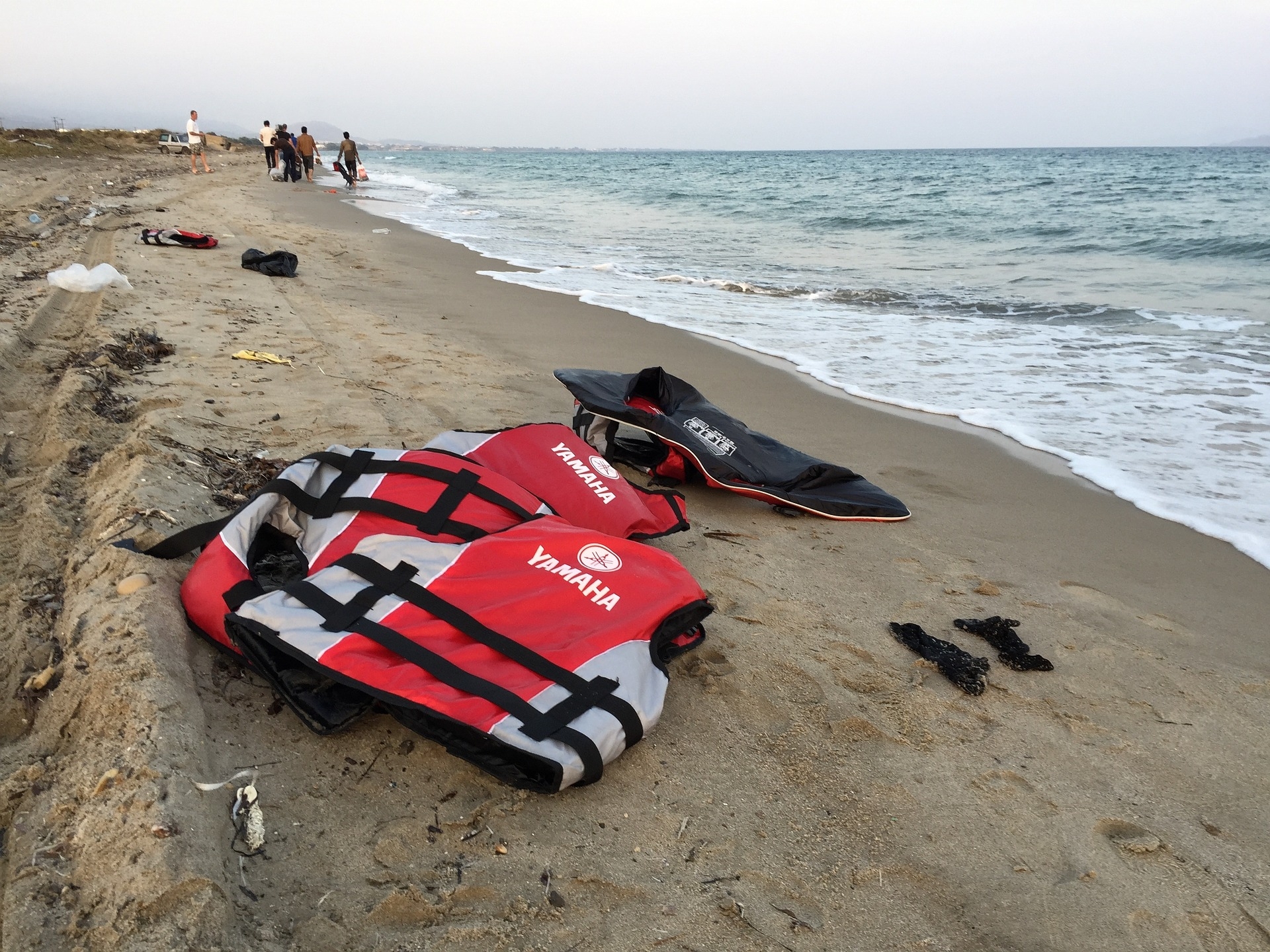
Media has covered the contemporary flux of people in a multitude of ways, but much of the coverage is irresponsible in its sensationalist and even downright xenophobic stance. The evaluation … Continued
CFP: Role of higher communication education
The second conference of ECREA’s temporary working group Journalism & Communication Education is looking for submissions. The 2016 conference’s title is “Higher communication education – serving or innovating the profession?” … Continued
CFP: Representations of war and peace
The annual conference of Archbishop Desmond Tutu Centre for War and Peace Studies is looking for submissions to its 2016 event. The conference is titled “Representing Peace and Conflict”. It … Continued
ARTICLE: Why stereotypes of China persist
The perpetuation of stereotypes of China and the Chinese in Western media is the result of many reasons, writes Jeanne Boden, of KU Leuven. The author sketches out the history … Continued
ARTICLE: Danish journalists accurate but biased
Danish journalists make few factual errors, but they are perceived as being politically biased, writes Mark Blach-Ørsten of Roskilde University. Sources of Danish news stories were asked to evaluate whether … Continued
CFP: Nordic Data Journalism conference deadline moved
The Nordic data journalism conference NODA16 is still accepting submissions. The organizers have decided to postpone the deadline for abstract submissions to the 15th of January. The original deadline was … Continued
ARTICLE: How journalists covered Syria?
In his newly published article Robin Vandevoordt, of University of Antwerp, builds bridge between practice-based studies of war reporting and general sociological studies of journalism as a profession. The key questions are … Continued
Nordicom’s newsletter European Media Policy has been published
A new issue of Nordicom’s newsletter European Media Policy is out now. The newsletter includes news about policy developments at the European level, and in addition, some international news. The news … Continued
REPORT: Journalists get PTSD from UGC
The viewing of distressing user generated content (UGC) can cause journalists to suffer from post-traumatic stress disorder (PTSD), write Sam Dubberley, Elizabeth Griffin and Haluk Mert Bal, all of the … Continued