





ARTICLE: Shorter sound bites, worse arguments
The shorter a television news sound bite is, the less likely it is to contain a proper argument, writes Eike Mark Rinke, of University of Mannheim. The author analysed a … Continued


ARTICLE: Shorter sound bites, worse arguments
The shorter a television news sound bite is, the less likely it is to contain a proper argument, writes Eike Mark Rinke, of University of Mannheim. The author analysed a … Continued

ARTICLE: Play metaphor is common in political PR
The relationship between politicians and talk show producers is a tense one, write Marcel Broersma , Bas den Herder and Birte Schohaus, all of University of Groningen. The authors explore … Continued

REPORT: BBC’s use of statistics not perfect
The British Broadcasting Corporation offers many examples of good use of statistics, but there is still room for improvement, an independent review has found. The study was ordered by the … Continued

PAPER: The three puzzles of newsroom innovation
The issues hindering innovation in newsrooms can be divided into three “sub-conflicts”, writes Ville Seuri, a Reuters Institute fellow and an assistangt chief sub-editor of the newspaper Helsingin Sanomat. Seuri … Continued

Under the title “Books of the week”, JRN will list new, relevant publications that have recently become available. Click the title of the book for further information on the publisher’s … Continued

ARTICLE: Information quality in Venezuelan media
Poor employment conditions and the polarized political discourse adversely affect the Venezuelan newspapers’ quality of information, write Luis M. Romero-Rodríguez, of Santiago de Cali University and University of Huelva, with … Continued

ARTICLE: The impact of digitalization on photojournalism
During the last two decades, photojournalism has undergone one of the largest changes since the invention of photography, write Sandra Štefaniková and Filip Láb, both of Charles University in Prague. … Continued

ARTICLE: Sensationalism in news coverage
New article by Bouchra Arbaoui, Knut De Swert and Wouter van der Brug, all of University of Amsterdam, explores how sensationalism in the news is affected by two characteristics of television … Continued

ARTICLE: Curation as a journalistic gatekeeping practice
New study by Xi Cui, of College of Charleston, and Yu Liu, of Florida International University, explores journalists’ curatorial practices with regard to linked and embedded sources in the online … Continued

ARTICLE: News consumption among young adults
Young adult audiences have increasingly gravitated toward online sources of news and information, write Dunja Antunovic, of Bradley University, Patrick Parsons, of Pennsylvania State University and Tanner R. Cooke, of … Continued

ARTICLE: Representation of ‘anti-EU’ parties in the UK
The rise of populist anti-EU parties was widely reported by British press during The European Parliament election of 2014. Did that coverage show citizens the character of these parties and where … Continued

ARTICLE: Journalists confused over crediting bots
Conventions regarding how to credit algorithmically produced news stories are various and incoherent, write Tal Montal and Zvi Reich, both of Ben Gurion University of the Negev. The authors interviewed … Continued
ARTICLE: BBC TV news headlines serve as “trailers”
The news headlines used in BBC’s flagship news program, BBC News at Ten, are designed not only to summarize, but also to stoke interest, write Martin Montgomery, of University of … Continued

ARTICLE: Norway’s press council has narrow ethics
The Norwegian press council (Pressens Faglige Utvalg, PFU) bases most of its rulings on a tradition of “discourse ethics”, writes Svein Brurås, of Volda University College. The author investigated the … Continued

REPORT: What ails journalism in conflict societies?
The research project Media, Conflict and Democracy (MeCoDem) has published a new policy brief document. The brief draws together the results of two rounds of interviews with both journalists working … Continued
Under the title “Books of the week”, JRN will list new, relevant publications that have recently become available. Click the title of the book for further information on the publisher’s … Continued

PAPER: Crowdfunded journalism around the world
A new Reuters Institute for the Study of Journalism (RISJ) fellowship paper on crowdfunded journalism has been published. Its author, Zichao Liu, is a senior writer at the Southern People’s … Continued

ARTICLE: Boko Haram viewed through national lenses
Both the French France 24 and the German Deutsche Welle depicted the Nigeria-based terrorist group Boko Haram in accordance with the countries’ foreign policies, write Eva Połońska-Kimunguyi, of Monash University, … Continued
ARTICLE: Irregular migrant children in the news
Journalists have an ethical responsibility to protect vulnerable groups and individuals, but also to shed light on their stories and include their perspectives, writes Anna Grøndahl Larsen. Children are a particularly … Continued
CFP: Human rights and power limitation in the internet eco-system
Guest editors of the International Communication Gazette are calling for papers for special issue on digital constitutionalism. Summer 2018 issue is called Human rights and power limitation in the internet eco-system Possible topics for … Continued

PAPER: Best practices in digital journalism teamwork
Multiskilled teams consisting of journalists, designers and developers are necessary for production of innovative and engaging digital journalism, writes RISJ fellow and former managing editor of Olivia magazine in Finland Ninni … Continued
ARTICLE: National frames shape Euro crisis
Do different political orientation of newspapers guarantee plurality in coverage? ask Susana Salgado, of University of Lisbon, Institute of Social Sciences and Heinz-Werner Nienstedt, of University of Mainz. The article looks at … Continued
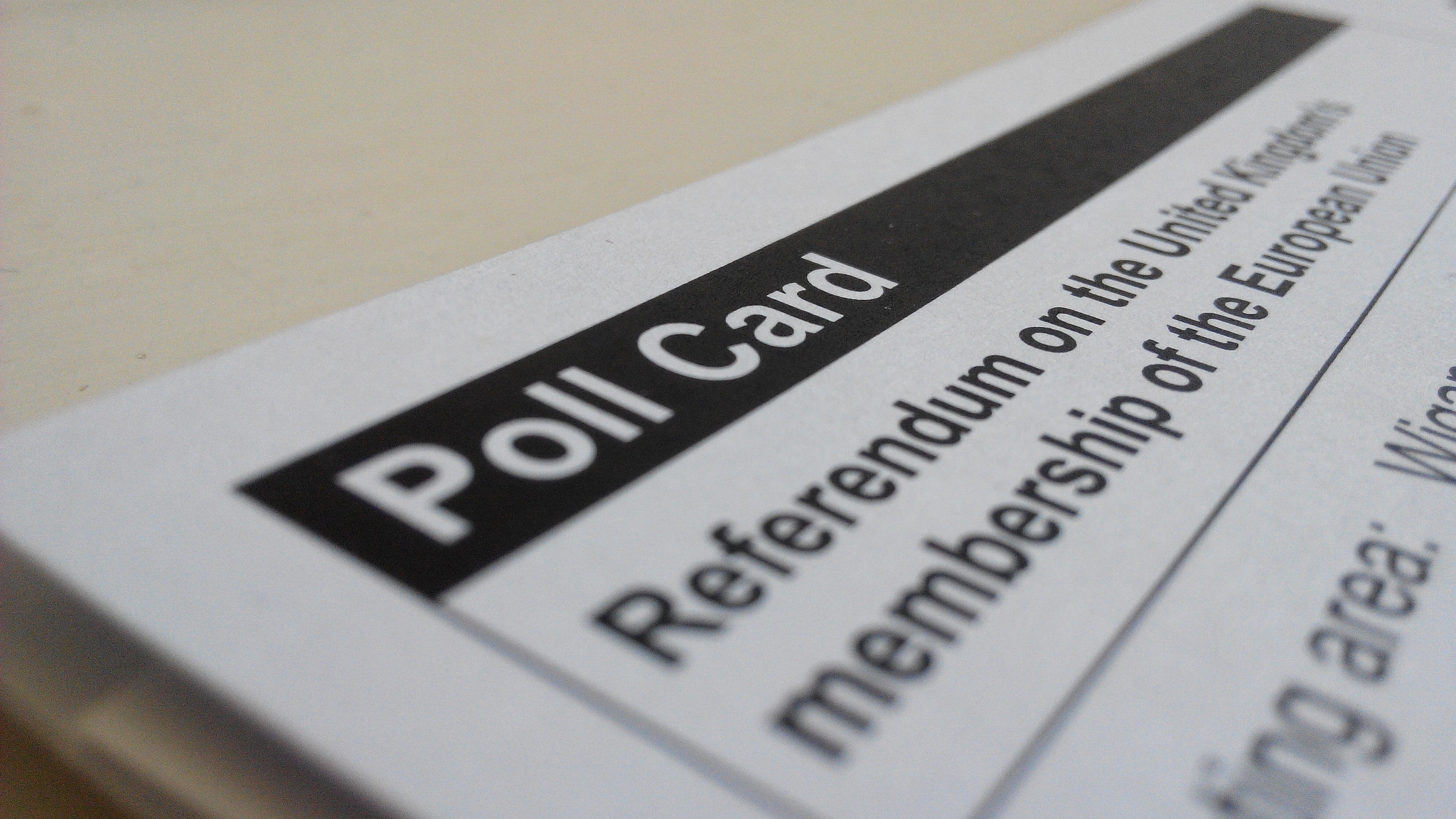
PROJECT: Coverage of Brexit was strongly negative
According to The European Journalism Observatory (EJO) analysis Europe’s newspapers were overwhelmingly negative towards Brexit. EJO conducted a content analysis of the print editions of three daily newspapers in each of 12 … Continued

PAPER: Journalists’ role in transitional societies
New MeCoDEM working paper written by Judith Lohner, Sandra Banjac and Irene Neverla is published. The paper maps the role of journalistic actors in transitional societies when covering democratisation conflicts. The writers draw … Continued

ARTICLE: Common quoting practice misleads readers
The journalistic practice of “monologisation”, removing interview questions from the end product, can severely mislead readers, writes Lauri Haapanen of University of Helsinki. Haapanen compared the recordings of journalistic interviews … Continued

ARTICLE: Why in-betweeners participate in journalism
People who are neither professional journalists nor typical audience members participate in producing journalism for many different reasons, writes Laura Ahva, of University of Tampere. Ahva interviewed 69 actors associated … Continued
ARTICLE: CCTV News fails due to obvious propaganda
China’s attempt to exert soft power through a global English language news channel, CCTV News, is in vain, writes John Jirik, a Turkey-based independent researcher. Jirik worked for the channel … Continued

ARTICLE: Constructing the identity of digital journalists
Changes to the digital media environment have been a new source of professional identity for digital journalists, write Patrick Ferrucci and Tim Vos. Their new article examines how American digital journalists … Continued

ARTICLE: Journalists embrace online commenting
Journalists are are becoming more comfortable with online comments and often engage with commenters to foster deliberative discussions or quell incivility, writes Gina Masullo Chen and Paromita Pain. The study draws on interviews … Continued

ARTICLE: Eighteenth-century news aggregation
Grub-Street Journal (1730–1737) was a weekly paper that satirized the conventions of London journalism. Its editor Richard Russel searched through publications for accounts of the same event and through satire … Continued