





CFP | 30.6. | Hate speech in Korea, Japan, and France
A workshop on hate speech in Korea, Japan, and France is calling for paper proposals. The workshop is part of a larger, comparative research project on the topic. It will … Continued


CFP | 30.6. | Hate speech in Korea, Japan, and France
A workshop on hate speech in Korea, Japan, and France is calling for paper proposals. The workshop is part of a larger, comparative research project on the topic. It will … Continued

ARTICLE: Turning journalism into a game motivates reporters
A study by Raul Ferrer-Conill, of Karlstad University, looks at the effects a gamified audience metrics system has on the journalists. The author interviewed 11 journalists and managers working for … Continued
CFP | 15.4. | Where is the critic in television journalism?
The Centre for Media and Celebrity Studies (CMCS) conference “Bridging Gaps: Where is the Critic in Television Journalism” is calling for papers. The conference will be held August 31 to … Continued
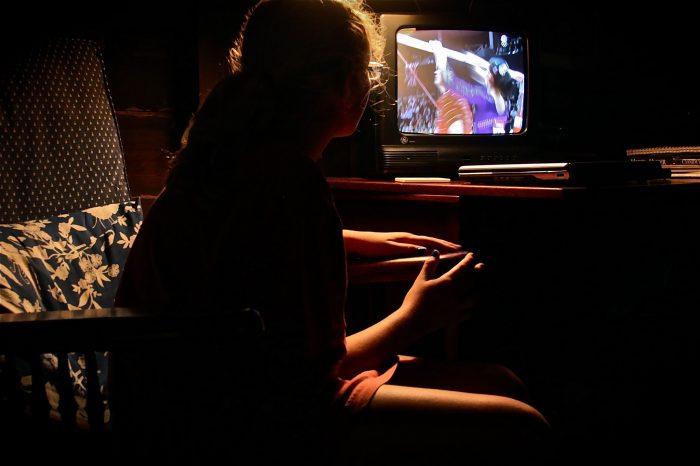
ARTICLE: Why make news for children – and what kind?
Israeli children’s news creators think no topic should be categorically excluded from the newscasts, Michal Alon-Tirosh, of Max Stern Yezreel Valley College, writes. Alon-Tirosh interviewed 15 professionals working with children’s … Continued

REPORT: The sharer brings credibility to news on social media
Trust towards the sharer of a link to a news article matters a lot on social media. A new study from the Media Insight Project, studied how US respondents decide … Continued

ARTICLE: Dialogical approach to representation of ethnic minorities
How could the journalistic representation of ethnic minorities be improved? Sheng Zou of Stanford University proposes a dialogical model representation, to evoke mutual understanding across differences. The author states that … Continued

ARTICLE: Criticism towards Facebook’s curation practices
A technology-focused news website Gizmodo ran two stories on Facebook in early May of 2016. They revealed, most notably, how Facebook’s Trending Topics stream was edited by a team of … Continued

ARTICLE: Differences between journalists’ and politicians’ Twitter use
Do journalists and politicians use Twitter hashtags differently? Gunn Enli and Chris-Adrian Simonsen, both of Oslo University, investigated the question by analysing the tweets sent by 10 Norwegian journalists and … Continued

ARTICLE: New Zealand’s media failed to build consensus about Snowden revelations
Some time after the early Snowden revelations in 2013, New Zealand implemented new surveillance reforms. Kathleen Kuehn of Victoria University of Wellington studied how Snowden’s revelations were framed. The author … Continued

ARTICLE: A Republican in the White House, more news on Israel
The party affiliation of the president of the United States affects the amount of news US newspapers publish on Israel, write Moran Yarchi and Amnon Cavari, both of Interdisciplinary Center … Continued

ARTICLE: News on rape shift blame and “mute the victim”
The way Australian press reports rape is troubling in many aspects, write Michelle Dunne Breen, Patricia Easteal, and Kate Holland, all of University of Canberra, with Georgina Sutherland and Cathy … Continued
CFP | 31.5. | What does it mean for journalism to be “constructive”?
An upcoming special issue of the journal Journalism Practice is calling for paper proposals. The issue is guest-edited by Laura Ahva and Mikko Hautakangas, both of University of Tampere, and … Continued

ARTICLE: News media affects German energy policy
News media has power to sway energy policy, especially at the beginning and at the end of a policy cycle, Nayla Fawzi, of Ludwig Maximilian University of Munich, writes. Fawzi … Continued

ARTICLE: Data journalism relies on an illusion of choice
Top ranked Nordic data journalism is paternalistic in nature, Ester Appelgren, of Södertörn University, writes. Appelgren analysed 31 data journalism stories nominated for the Nordic Data Journalism Awards in 2013, … Continued

On week 12 the following publications have come to our attention: Media and Everyday Life Written by Tim Markham Published by Palgrave Macmillan 222 pages Sport, Media and Mega-Events Edited … Continued
CFP | 30.4. | Media and dysfunctions of democracy
A conference entitled “Pathologies and dysfunctions of democracy in the media context” is calling for paper proposals. The conference is organised and hosted by the University of Beira Interior in … Continued
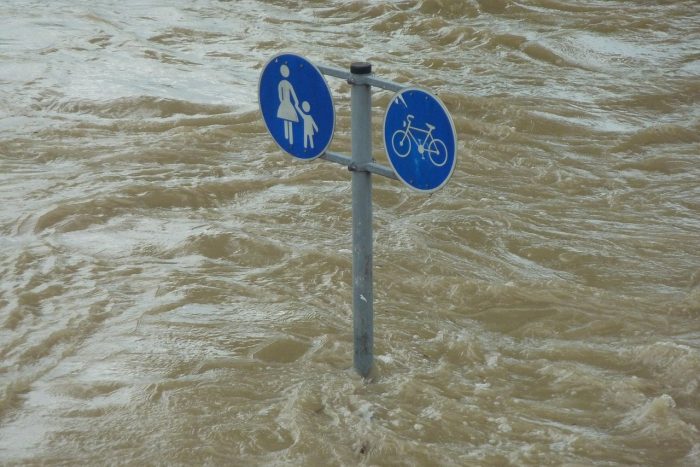
ARTICLE: Syrian refugees described as flooding water
The most commonly used category of metaphors for Syrian refugees is that of water masses, write Raith Zeher Abid (University of Karbala), Shakila Abdul Manan (Universiti Sains Malaysia), and Zuhair … Continued
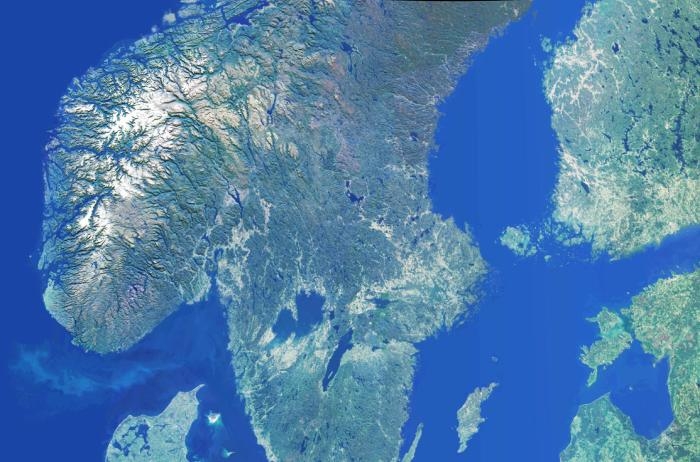
REPORT: Status of the Swedish newspaper market
A new report from Nordicom, written by Jonas Ohlsson tracks the structural change in the Swedish newspaper industry. The concentration of ownership has increased during the 21st century. The eigth … Continued

ARTICLE: South Korean media is highly negative toward e-cigarettes
Sei-Hill Kim, James F. Thrasher, Yoo Jin Cho and Joon Kyoung Kim, of University of South Carolina, and Myung-Hyun Kang, of Hallym University (not in original order), analysed newspaper articles and television … Continued

ARTICLE: Media’s role in spreading populist blame attributions
How are populist attributions of blame framed in the media? Michael Hameleers, Linda Bos and Claes de Vreese, of the University of Amsterdam, conducted a content analysis of 867 stories … Continued
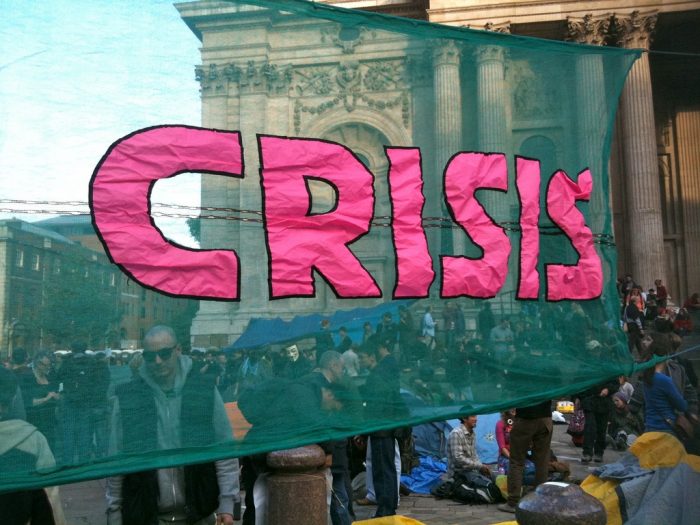
ARTICLE: The emotionality of reporting crisis
Johana Kotišová, of Université de Liège and Masaryk University, explores how crisis reporters’ emotions are articulated by the processes of crisis reporting. The focus is on reporting refugee crisis and … Continued

ARTICLE: Citizens have specialized in their orientation towards news
Specialization and disconnection are increasing in audiences’ news orientation, states a new study by Eiri Elvestad, of the University College of Southeast Norway, and Lee Shaker, of Portland State University. … Continued

ARTICLE: News on HIV prevention medication downplay the virus’s severity
The way online news frame HIV prevention medication may lead to confusion among those at risk of contracting the virus, Joseph Schwartz, of Northeastern University, and Josh Grimm, of Louisiana … Continued
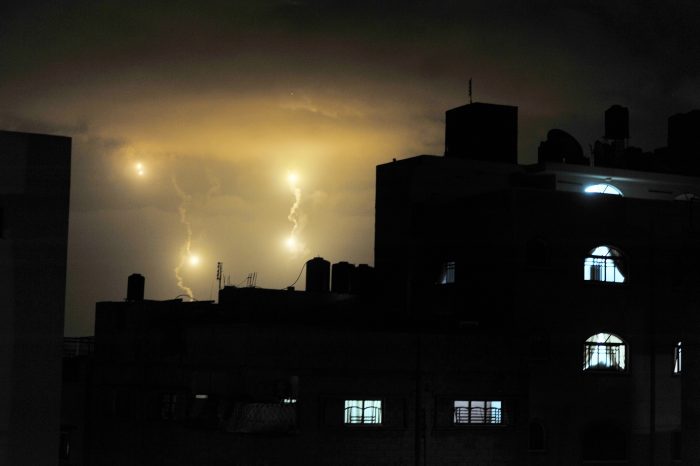
ARTICLE: US newspapers’ coverage of alleged human shields “highly flawed”
The way US newspapers covered the allegations made of Hamas using human shields was “highly flawed”, Shane M. Graber, of University of Texas at Austin, writes. The author analysed 66 … Continued

ARTICLE: Youtube and international news organisations
YouTube channels offer international news organisations an opportunity to share content with a worldwide audience, write Eisa al Nashmi, of Kuwait University, Michael North, of Central Connecticut State University, Terry … Continued

ARTICLE: Is Humans of New York public service journalism?
The famous Humans of New York (HONY) photography project can be taken as a form of citizen-driven, public service journalism, Jessica Roberts, of Boise State University, writes. Roberts analysed the … Continued

ARTICLE: Rather than dying, print is innovating its way into the future
The “meme” of print journalism on its deathbed is uncalled for, argue John O’Sullivan (Dublin City University), Leopoldina Fortunati (University of Udine), Sakari Taipale (University of Jyväskylä), and the late … Continued
CFP | 23.6. – 4.8. | Interactive digital storytelling
The 10th International Conference on Interactive Digital Storytelling (ICIDS2017) is calling for various submissions. The conference will take place in Funchal, on the Madeira Islands (Portugal), between the 14th and … Continued

ARTICLE: TV health news use most sources
Health news on television are more “richly sourced” than similar news on radio, in print, or online, Joyce Stroobant, Rebeca De Dobbelaer, and Karin Raeymaeckers (all of Ghent University) write. … Continued

PROJECT: Where do people get their views on violence?
A new research project has been launched to map out the sources from which Finns find information on violent crime, and how that information affects their perceptions on the actual … Continued