






CFP | 30.9. | Scandals, media and culture
The 2nd International Conference on Scandalogy is calling for paper proposals. The event will take place at the University of Bamberg, Germany, on the 29th and 30th of March 2018. … Continued
Reading, writing, rumour: press readership and the making of war knowledge in Australia 1914–1918
CFP | 30.9. | Scandals, media and culture
The 2nd International Conference on Scandalogy is calling for paper proposals. The event will take place at the University of Bamberg, Germany, on the 29th and 30th of March 2018. … Continued
ARTICLE: Fear of surveillance causes journalists to change their ways
The threat of governmental surveillance, or the “Big Brother feeling”, causes journalists to change their behaviour both in their work life and in private. Stephenson Waters, of University of Florida, … Continued
CFP | 15.3. | The socio-political economy of communication
The 2018 Asian Congress for Media and Communication (ACMC) is calling for paper proposals. The event will take place in Taipei, Taiwan, between the 27th and 29th 2018. The conference … Continued
ARTICLE: Chat apps bring journalists new possibilities, but also dilemmas
Mobile chat apps offer journalists new opportunities for interacting with sources, write Valerie Belair-Gagnon and Colin Agur, both of University of Minnesota, with Nicholas Frisch, of Yale University. The authors … Continued
On the week 36 the following publications have come to our attention: What Is Sustainable Journalism? Edited by Peter Berglez, Ulrika Olausson and Mart Ots Published by Peter Lang 374 … Continued
ARTICLE: In Sweden, newspapers are still agenda setters
It has been argued that the increasing choice in media outlets would dilute the agenda setting power of traditional news media. The assumption was put to the test by Monika … Continued
ARTICLE: Rethinking media’s responsibility towards refugees
Lilie Chouliaraki and Tijana Stolic, both of the London School of Economics and Political Science, studied newspaper headline images from five European countries. They created a typology of visibilities of … Continued
ARTICLE: Popular and regional press share news values
Popular newspapers and regional newspapers resemble each other in terms of how often they employ different news values, Mark Boukes and Rens Vliegenthart, both of the University of Amsterdam, write. … Continued
ARTICLE: Four ways to control media by government funding
“Regulation, legislation, physical attacks, and threats against journalists or media owners are effective methods used to capture the media. But funding is arguably the most effective method of all”, Marius … Continued
ARTICLE: Changing coverage of violence against women
Violence against women in Australia has largely been reported as isolated events, not as a social problem requiring society-wide response. Article by Jenny Morgan, of the University of Melbourne, and … Continued
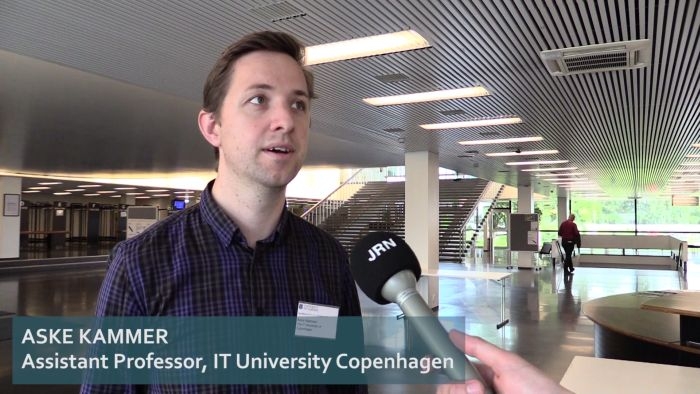
VIDEO: With whom do news apps share their data with?
Aske Kammer, Assistant Professor at IT University Copenhagen, told us about his research paper presented at NordMedia 2017. Kammer has investigated news applications for smartphones, and how data is exchanged … Continued
ARTICLE: A multi-level look at environmental journalism
How do different levels of influences affect the daily work of environmental journalists? Ever Josue Figueroa, of the University of Texas at Austin, studied environmental journalism as a space for … Continued
ARTICLE: Age and gender of political journalists influence interaction on Twitter
Millenials are described as more interactive online than older generations. This was not the case in a new study on political journalists. John H. Parmelee, Nataliya Roman, Berrin Beasley and … Continued
ARTICLE: Health journalism not prioritized in Native American news media
Health news is needed and valued by the Native American communities in the US, but coverage about the topic is insufficient. Sherice Gearhart and Oluseyi Adegbola, of Texas Tech University, … Continued
ARTICLE: The changing representations of a dictator
Leopoldo Galtieri (1926 – 2003) was one of Argentina’s last dictators. He ruled from December 1981 to June 1982, soon after which the country underwent elections and transitioned to democracy. … Continued
ARTICLE: Four types of “fake news”
So-called fake news have become a widely discussed topic especially since the 2016 presidential elections in the United States. The concept and the term, however, are older, write Edson C. … Continued
Here is a list of all academic peer-reviewed articles, reports and other papers published in September 2017 about journalism research. The list is updated a couple of times per week. … Continued
ARTICLE: Breaking news stories drive direct traffic
The importance of social media and search engine referrals reduces during breaking news events, Nic Newman and Antonis Kalogeropoulos, both of Oxford University, write. The authors analysed the desktop and … Continued
ARTICLE: Both audience and journalists unsure of fact checkers
Both journalists and lay social media users have mixed opinions on fact checking and information verification services, write Petter Bae Brandtzaeg and Asbjørn Følstad, both of the Norwegian research company … Continued
On the week 35 the following publications have come to our attention: Media Globalization and Digital Journalism in Malaysia Written by Amira Firdaus Published by Routledge 194 pages Media and … Continued
CFP | 31.10. | Why is the modern world so susceptible to fake news?
The journal Policy and Internet is calling for articles for its upcoming special issue on fake news. Entitled “Reframing ‘Fake News’: Architectures, Influence, and Automation”, the issue is scheduled for … Continued
ARTICLE: Millenials’ definition of “news” is becoming broader
The so-called Millenial generation considers as “news” a wider selection of information than what journalists and scholars usually do. This finding is reported by Natalia Rulyova, of University of Birmingham, … Continued
ARTICLE: Hong Kong’s news media increasingly connected to mainland China
Media capture in Hong Kong has distinctive characteristics. There is the uncensored media sector and open market economy, but the relatively small size of the region and proximity to the … Continued
Sherry S. Yu, of the University of Toronto, asks how do ethnic media deal with the financial challenges of local news production. The author studied Korean media in Vancouver and … Continued
ARTICLE: Lack of awareness and practical difficulties constrict diversity in Flemish news
Women and ethnic minorities continue to be underrepresented in the news media. Hanne Vandenberghe, Leen d’Haenens and Baldwin Van Gorp, all of KU Leuven, wanted to find out the extent … Continued
VIDEO: What is constructive journalism?
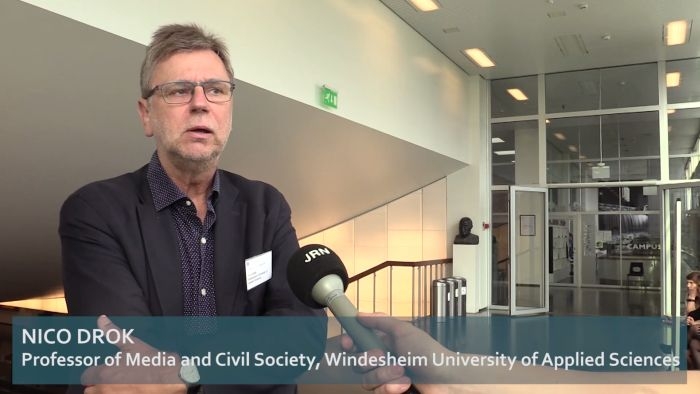
Liesbeth Hermans, Professor of Constructive Journalism at Windesheim University of Applied Sciences, in the Netherlands, talked to us about her research paper presented at the NordMedia 2017 conference. She has … Continued
ARTICLE: Art as an alternative form of journalism
The artist Owen Maseko’s 2010 exhibition in Bulawayo gallery in Zimbabwe critiqued the country’s 1980s genocide, during which more than 20 000 people were killed. The exhibition was banned immediately and … Continued
PAPER: Design and features on news websites can affect perceived bias
With news websites increasingly adapting to individual users, the experience of each user is becoming more tailored. User characteristics, website design and technical features of websites impact users’ perception of … Continued
ARTICLE: Live-blogged news are harder to follow
Live-blogging is an increasingly popular, speedy genre of online news delivery. The format, however, is more difficult to follow than the traditional “inverted pyramid”, Angela Lee, of University of Texas … Continued
ARTICLE: News frames influence sharing on Twitter and Facebook
Sebastián Valenzuela, Martina Piña and Josefina Ramírez, all of Pontificia Universidad Católica de Chile, studied how news frames affect sharing on social media in Chile – the country with the highest … Continued