




CFP | 2.5. | Workshop on media manipulation
The workshop “Media manipulation: ideologies of influence and political economies of intervention in a digital world” is calling for papers. The event will be held on 29 June 2018 at … Continued

CFP | 2.5. | Workshop on media manipulation
The workshop “Media manipulation: ideologies of influence and political economies of intervention in a digital world” is calling for papers. The event will be held on 29 June 2018 at … Continued

REPORT: High level of distrust in news in Turkey
People’s trust and mistrust in news media Turkey indicate a very polarised society and news media, a new report by Servet Yanatma of the University of Oxford, shows. The report … Continued
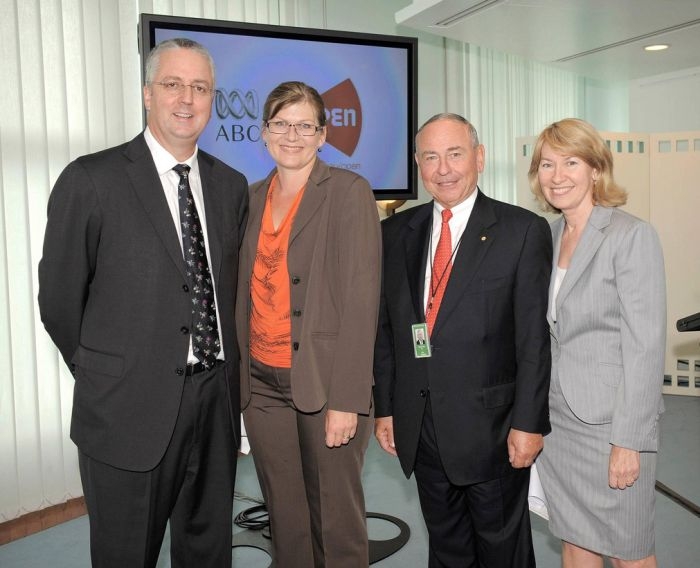
ARTICLE: The ABC Open project has managed to emphasize reciprocity
Previous research has argued that journalists involved in participatory projects have exercised too much control over the publication of user-generated content. Bill Reader of Ohio University, examined the Australian participatory … Continued
CFP | 4.7. | African digital media review
The special issue of African Journalism Studies titled “African Digital Media Review” is calling for papers. The issue broadly exploresthe impact of digital technologies on a range of social and … Continued

ARTICLE: Convergence and de-convergence at a Chinese newsroom
A well-established organizational culture and a working routine are crucial for legacy media when adapting to rapid changes in the digital age, a new study states. Ke Li, of the … Continued
CFP | 22.6. | Political Studies Association: Political reversals and renewals
Political Studies Association is calling papers for Media & Politics Group Annual Conference 2018 titled “Political Reversals and Renewals. The conference is organized at the University of Nottingham on 8-9 … Continued

ARTICLE: Indian entrepreunial journalism and social identity
How do entrepreneurial journalists see their social identity and how does this influence the journalism they practice? Summer Harlow of the University of Houston, and Monica Chadha of Arizona State … Continued
CFP | 30.9. | Populism and the media across Europe
The journal Central European Journal of Communication is calling for papers for its special issue on “Populism and the Media Across Europe”. For this special issue the journal invites submissions … Continued

ARTICLE: Journalist’s role orientations shape how they tweet about news
In regular news production, a journalist’s role orientation cannot solely account for what ends up on the news output. In Twitter, the roles are manifested quite often, a study finds. … Continued
CFP | 1.5. | Public Service Broadcasting In The Digital Age
The VIEW Journal is calling for papers on the topic “Public Service Broadcasting In The Digital Age”. This special issue proposes a reexamination of public service broadcasting (PSB) in the … Continued
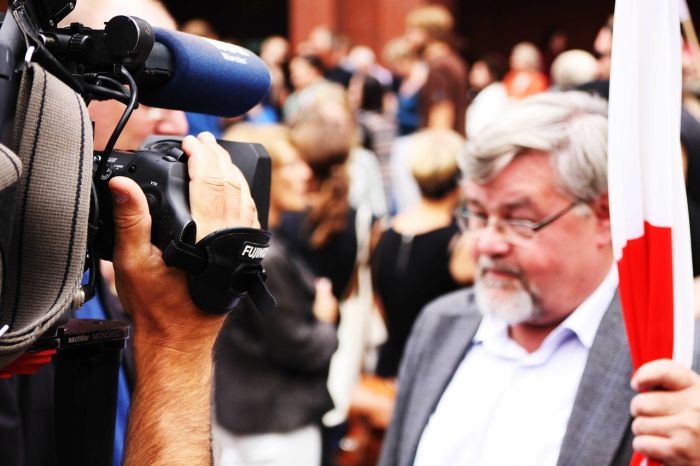
ARTICLE: Who gets to speak and what in Flemish TV news?
Significant differences exist between issues in the actors that get to speak in television news, new study from Belgium finds. Kathleen Beckers and Peter Van Aelst, both of the University … Continued
CFP | 15.6. | Book chapters on “Mediated Shame”
The aim of the proposed book “Mediated Shame: Disparaging Poverty in Media and Popular Culture” is to explore how media impose shame on and facilitate shaming of economically underperforming people … Continued

ARTICLE: Western approaches to ethics training have failed in Cambodia
Fergal Quinn, of the University of Limerick, studied the teaching of journalism ethics in a developing country. The author interviewed 25 organizers of journalism training programs in Cambodia and 29 … Continued

On the week 15/2018 the following publications have come to our attention: Media and Transnational Climate Justice – Indigenous Activism and Climate Politics By Anna Roosvall and Matthew Tegelberg Published … Continued
CFP | 7.6. | The press and the vote
The Newspaper & Periodical History Forum of Ireland is calling for papers for the conference “The Press and the Vote”. The tenth anniversary conference is held at the National University … Continued

ARTICLE: Facebook use as a predictor of political knowledge
How does the use of Facebook connect to the level of people’s political knowledge? In a new study, researchers explored this relationship by analysing two representative datasets from the United … Continued

ARTICLE: Colombian media shapes people’s perceptions of income inequality
David Coppini of the University of Denver, and German Alvarez and Hernando Rojas, both of the University of Wisconsin, studied the relationship between media exposure, perceptions of inequality, and political … Continued
Convergence, The International Journal of Research into New Media Technologies, is calling for papers for its special issue “Gamifying News: Playful approaches to public engagement”. As a natural continuation of … Continued
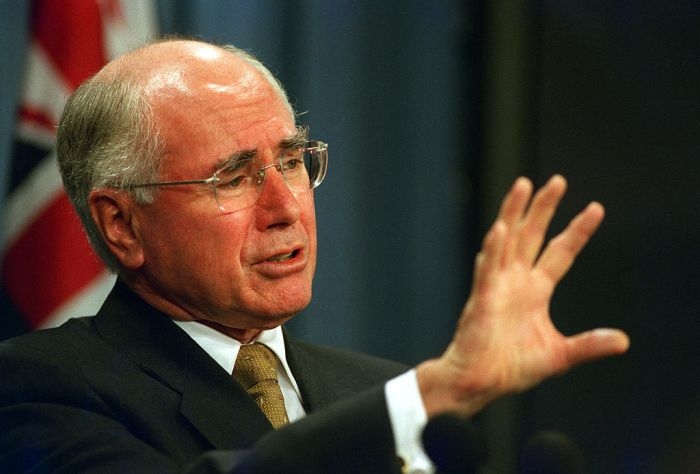
ARTICLE: Examining the hybrid media system and politics in Australia
Australia’s Prime Minister John Howard’s (1996–2007) use of talk back radio and YouTube were pivotal in the trend towards ‘disintermediation’ in Australian politics, a new study states. Caroline Fisher, David … Continued

ARTICLE: Generation C uses all available sources to receive local news
Generation C has always been a challenging group for news organizations. New research identified Generation C’s local news repertoires, and build an integrated model of multiplatform news consumption. According to … Continued
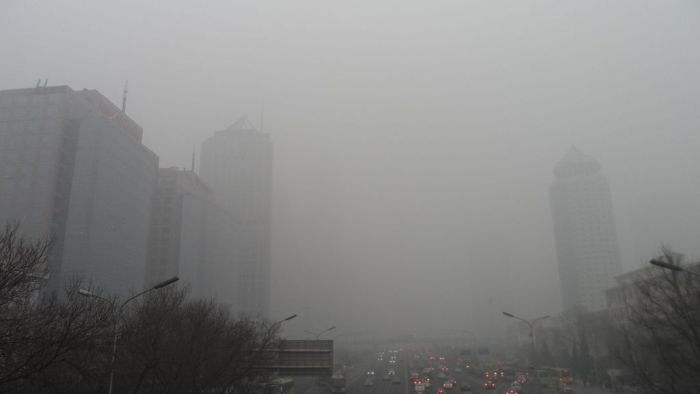
ARTICLE: Reporting of the Beijing’s 2013 smog hazard emphasized the role of experts
Air pollution is one of the main environmental concerns in Chinese cities. Sibo Chen, of Simon Fraser University, studied how Beijing’s smog hazard in 2013 was covered by the Xinhua … Continued

ARTICLE: News audiences are not fragmented in the Japanese Twittersphere
Existing studies on ideological selective exposure have several limitations, state Tetsuro Kobayashi of City University Hong Kong, Yuki Ogawa of Ritsumeikan University, Takahisa Suzuki of Tsuda University, and Hitoshi Yamamoto … Continued

ARTICLE: How online harassment influences the work of female journalists
Female journalists face rampant online harassment, across different cultures, new study states. Researchers interviewed 75 female journalists who have worked in Germany, India, Taiwan, the United Kingdom, and the United … Continued
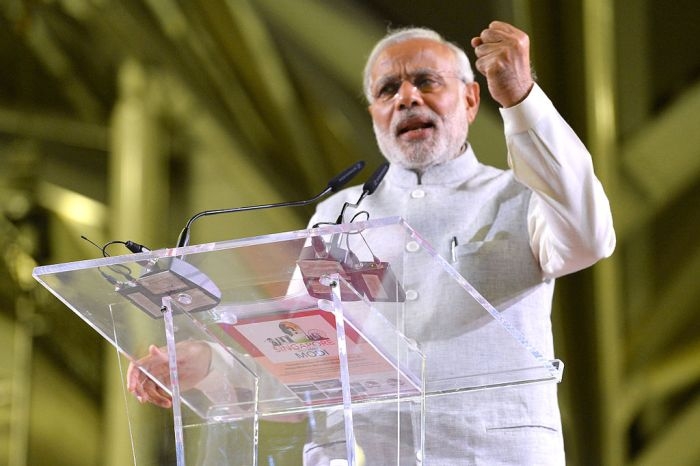
ARTICLE: Challenging the political elite remains restricted in India
The relationship between the news media and individuals of the political elite in India can be conceptualized as ‘contingent heteronomy’, a new study argues. Swati Maheshwari and Colin Sparks, of … Continued

ARTICLE: Scandinavian news websites are not linked on equal terms
Hyperlinking patterns of news websites can be seen as indicators of flow of information. News outlets are not connected equally, and significant parts of the journalistic sector are disconnected from … Continued
On the week 14/2018 the following publications have come to our attention: Business Strategies for Magazine Publishing: How to Survive in the Digital Age By Mary Hogarth Published by Routledge … Continued

ARTICLE: Political satire challenged in the UK
Humour and satirical attitudes are often intertwined to political communication and journalism. The new political landscapes, in the president Trump’s US and the Brexit’s UK, have challenged mainstream broadcast political satire, … Continued

ARTICLE: Paradigm repair and building the journalistic paradigm
Earlier research has higlighted instances of ‘paradigm repair’, moments when journalists deploy discursive strategies to defend the paradigmatic status quo from a perceived internal threat. These threats have included different … Continued
Here is a list of all academic peer-reviewed articles, reports and other papers published in April 2018 about journalism research. The list is updated a couple of times per week. … Continued

ARTICLE: Journalists at El Mundo use emotional and social resources to cope with uncertainty
How does uncertainty affect journalists’ job expectations? Manuel Goyanes and Eduardo Francisco Rodríguez-Gómez, of Universidad Carlos III de Madrid, did observation at the workplace and interviews with 27 managers and … Continued