





On week 9 the following publications have come to our attention: Visual Media in Indonesia Written by Edwin Jurriëns Published by Routledge 248 pages Media in China: Constructing National Resistance … Continued


Do Your Own Research: What Skepticism of Expertise Means for the News Media in the U.S.
On week 9 the following publications have come to our attention: Visual Media in Indonesia Written by Edwin Jurriëns Published by Routledge 248 pages Media in China: Constructing National Resistance … Continued

CFP | 29.4. | Historical perspectives on minorities/majorities in media
The Communication History section of the European Communication Research and Education Association (ECREA) is calling for paper and panel proposals for its upcoming workshop entitled “Our group first! Historical perspectives … Continued
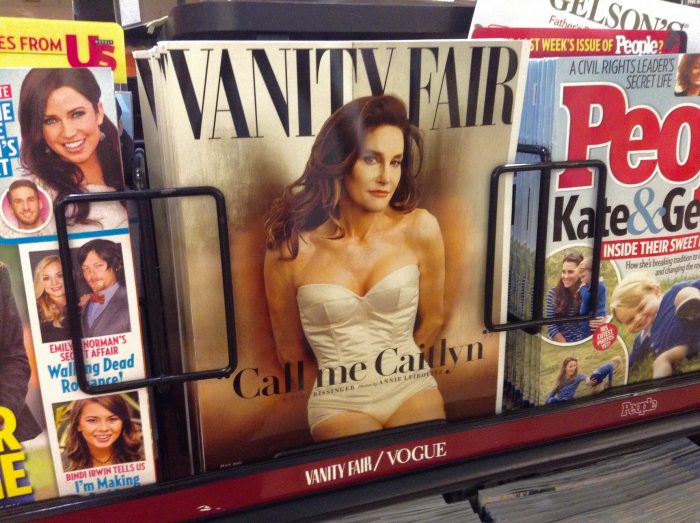
ARTICLE: How did Caitlyn Jenner change the news on transgender people?
On 24th of April 2015 Olympic gold medalist Bruce Jenner publicly announced his gender transition into Caitlyn Jenner. The announcement was shortly followed by a reality television show focusing on … Continued
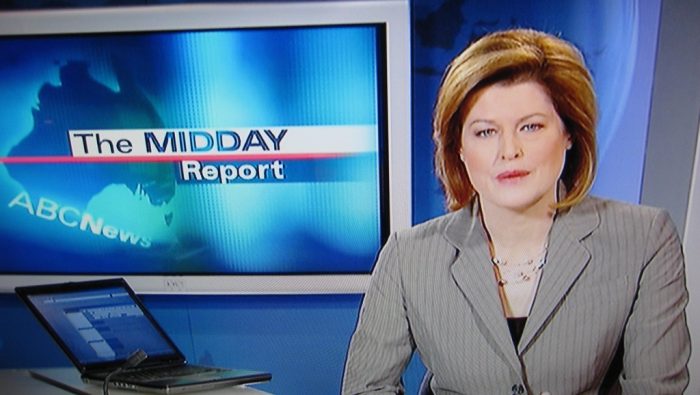
ARTICLE: Visual aids help viewers recall numbers from TV news
Presenting numerical data in tables or graphs will help TV news audience recall the information, a study on American college students shows. Ivanka Pjesivac, of University of Georgia, with Nicholas … Continued
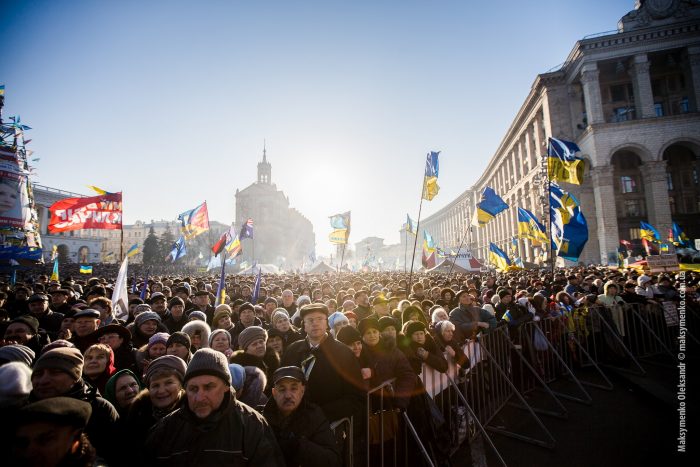
ARTICLE: Visual framing of the Ukraine conflict
As political conflicts are defined and, indeed, often enacted in the media, images are powerful carriers of meaning, influencing what we know and how we feel about a conflict, write … Continued

ARTICLE: Free software and limited resources shape data journalism
In their new article Mary Lynn Young, of University of British Columbia, Alfred Hermida, of University of British Columbia, and Johanna Fulda examine the quality of Canadian finalists and winners in … Continued
CFP | 25.3. | 22nd International Conference on Information Technology and Journalism
22nd International Conference on Information Technology and Journalism is now calling for papers. The conference theme is “Big data – Small world”. The event is supported by the IPSA RC10 … Continued

ARTICLE: Australian news photographers and trauma
Fay Anderson, of Monash University, examines Australian news photographers’ and picture editors’ experiences when covering hazardous assignments and the physical and psychological costs. The interviews revealed that PTSD and trauma-related symptoms … Continued
CFP | 31.5. | Prague Media Point Conference 2017
Prague Media Point Conference, subtitled this year as “Media in the Post-Truth World: The New Marketplace of (Dis)information”, is now accepting paper abstracts. The event takes place in Prague on … Continued
ARTICLE: Who controls the news?
Digital media have fundamentally changed the public sphere in terms of power and relationships among actors, write Bengt Johansson and Tomas Odén, both of University of Gothenburg. Their new article … Continued

ARTICLE: Journalistic roles in Muslim-majority countries
New study by Nurhaya Muchtar, of Indiana University of Pennsylvania, Basyouni Ibrahim Hamada, Qatar University, Thomas Hanitzsch, University of Munich, Ashraf Galal, Cairo University, Masduki, Indonesian Islamic University, and Mohammad … Continued
CFP | 31.3. | Journalism, “alternative facts”, and society
The journal Cosmopolitan Civil Societies is looking for articles for a special issue entitled “Alternative Facts: Constructing Truth in Civil Societies”. It is set to be published in July 2017. … Continued
ARTICLE: What do migrants use the host country’s media for?
Amanda Alencar, of Erasmus University Rotterdam, and Mark Deuze, of University of Amsterdam, interviewed 49 immigrants over their media use. The sample included migrant workers and refugees living in either … Continued
CFP | 30.4. | Journalists’ associations and political change
The journal Media and Communication is calling for article proposals for its upcoming special issue on how journalists’ professional associations deal with changes in political systems. The journal is open … Continued

ARTICLE: Why journalists choose to cover suicide
Journalists usually believe suicide deaths should not be covered, yet they regularly do write and publish stories about them, a study on US newspaper journalists found. Randal A. Beam, Sue … Continued
On week 8 the following publications have come to our attention: Innovation Policies in the European News Media Industry Edited by Hans van Kranenburg Published by Springer International 240 pages … Continued
CFP | 21.3. | Developments in lifestyle journalism
Editors of an upcoming, edited book on lifestyle journalism are calling for chapter proposals. The book is planned with Taylor & Francis’ Routledge imprint, and it’s editors are Lucia Vodanovic … Continued
ARTICLE: Journalists change roles in health crises
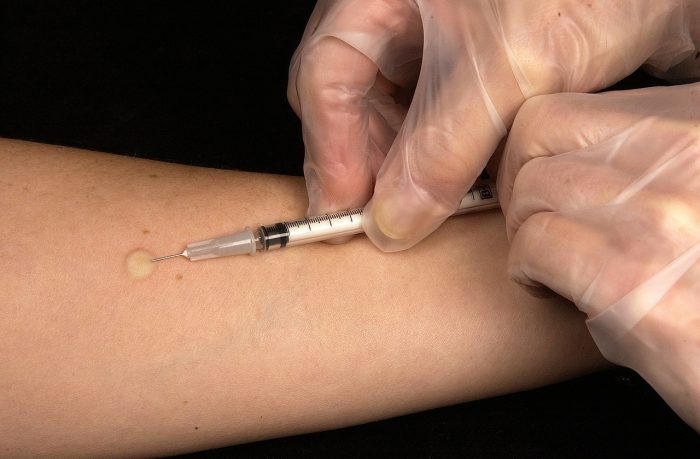
Journalists’ conceptions of their role change during health crises, such as epidemic outbreaks, write Celine Klemm and Tilo Hartmann, both of Vrije Universiteit Amsterdam, with Enny Das, of Radboud University … Continued
CFP | 1.7. | Ethics in sports journalism
A conference on the ethics in sports journalism, entitled “Sports Journalism: ethical vacuum or ethical minefield?”, is calling for paper proposals. The event is organised by the Institute of Communication … Continued

ARTICLE: For audience engagement, print is still king
Audiences to United Kingdom’s largest news brands still overwhelmingly consume their news via print, Neil Thurman, of both Ludwig Maximilian University of Munich and University of London, discovered. Thurman used … Continued

ARTICLE: News coverage of teenagers and social media
News constructions of the relationship between teens and social media have significant implications for young people, write Susannah R. Stern, of University of San Diego, and Sarah Burke Odland, of University … Continued

ARTICLE: Clickbait elements are not always effective
Nowadays, a headline is often the primary way of getting a potential reader interested in an article. This has led to something known as clickbait, write Jeffrey Kuiken, of University … Continued
CFP | 20.3. | Public Lives/Private Platform: The Politics of Twitter
Organisers of symposium “Public Lives/Private Platform: The Politics of Twitter” are calling for papers. The event takes place on 23-24 May 2017 at the University of Amsterdam, The Netherlands. It is … Continued
ARTICLE: Donor power and journalism
Martin Scott, of University of East Anglia, Mel Bunce, City University of London, and Kate Wright, of Edinburgh University, explore how foundation funding influence on international public service journalism and journalistic practices. … Continued
CFP | 15.4. | Bridging Gaps: Where is the critic in television journalism?
The Centre for Media and Celebrity Studies (CMCS) is calling for papers for the international conference “Bridging Gaps: Where is the Critic in Television Journalism?”. The event is organised in … Continued

ARTICLE: US journalists pursue news they don’t consider worthy
In order to constantly keep their web pages updated, American newspapers often turn to stories their journalists think are not important, Nikki Usher, of George Washington University, writes. The finding … Continued
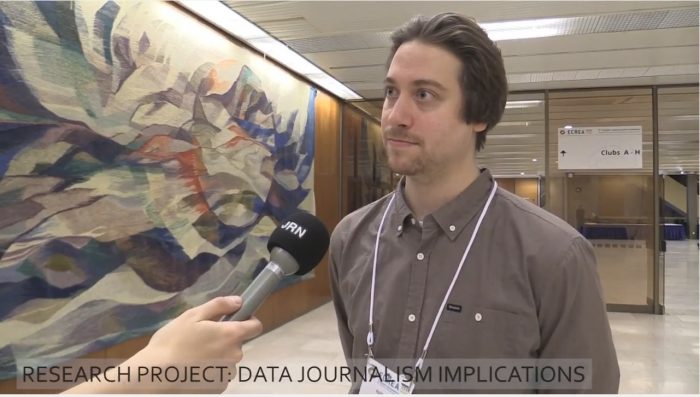
VIDEO: Data journalism implications
Florian Stalph, Research Associate at the University of Passau talked to us about his research. He told about his research about data journalism implications. Stalph is also interested in data … Continued
CFP | 15.7. | Opportunities and threats in algorithmic news
A conference on “Algorithms, automation, and news” is calling for paper proposals. The conference will take place on the 22nd and 23rd of May 2018 in Munich, Germany. The conference … Continued

ARTICLE: Online audience engagement is not that important
Audience engagement features affect the perceived value of a news outlet only slightly, Isabelle Krebs and Juliane A. Lischka, both of University of Zurich, write. The authors surveyed 313 Swiss … Continued
ARTICLE: Distrust of news associated with use of non-mainstream sources
People who generally distrust the news media are more likely to get their news from non-mainstream sources, Richard Fletcher, of University of Oxford, and Sora Park, of University of Canberra, … Continued