





The new study by Hatef Pourrashidi Alibigloo from University of Religions and Denominations in Qom, Iran, and Javad Alipoor from Tabriz University in Iran analyzed coverage of the Israel-Iran conflict in the American CNN and the Russian news agency TASS.
The roots of the Iran-Israel conflict extend to over four decades back, to the foundation of the Islamic Republic of Iran in 1979. Back then, the prominent Shia Marja (a concept in Shia Islam, meaning a supreme legal authority and source of emulation) and Supreme Leader of the Islamic Republic of Iran, Ayatollah Khomeini, exhorted all Muslims worldwide to oppose Israel and Zionism.
Even earlier, Muslim and Arab relations with Jews were strained, as in the early days of Islam 629 AD the Khyber wars, which were brought about when Jews opposed Muslim rule. In contrast, Iran had a tradition of helping the Jewish nation, starting with Cyrus the Great saving them from Babylonian captivity of Nebuchadnezzar I. This tradition was continued by the Pahlavi dynasty, much to the chagrin of Khomeini.
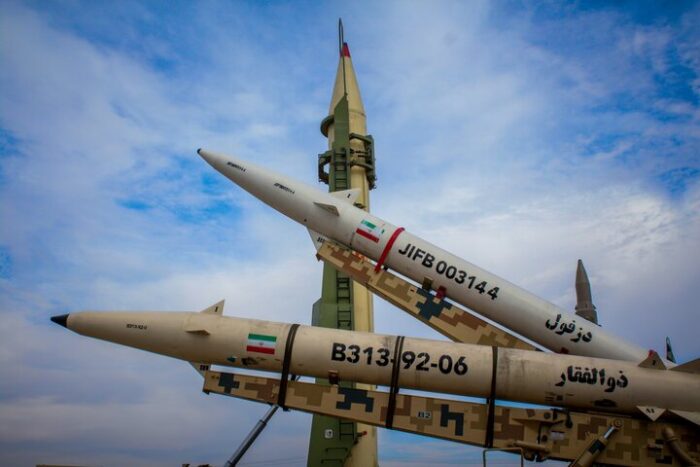
Israel’s attack on Iranian military advisors in Syria on April 1 2024 heightened tensions. Iran’s revenge came on April 13 2024 in the form of a missile and drone attack on Israel, beginning a direct military confrontation between the nations. This occurred along an increased propaganda offensive on both sides. The study examines the media portrayal of this conflict in the Western media, represented by CNN, and Eastern media represented by TASS.
The research utilized a thematic analysis method on 40 news media articles from each media outlet, for a total of N=80. The collection lasted until a theoretical saturation was reached; The coding focused on textual content, capturing framing strategies and thematic patterns.
TASS and Russia perceived Israel as an extension of the US and thus saw Iran as a challenger to the US. In a similar manner to emphasizing the resilience of Russia against sanctions imposed by the West, TASS also sought to highlight Iran’s resilience against sanctions b y the US and EU.
It was evident that TASS sought to demonstrate the Russian Federation’s desire to play a significant and peaceful role in the Middle East. This theme draws inspiration from Herman and Chomsky’s (1988), presenting Russia as a benign actor to counter the Western hegemony.
TASS also sought to portray Israel as fearful, and this fear as being an ally of the West. It also sought to underscore the fact that Russia is neither a permanent ally or an enemy to Israel – thus Russia sought to both to challenge Israel and its Western allies but also to show Israel’s authority and power. However, the authors emphasize that Russian foreign policy indicates that it is not a reliable ally.
According to the authors, TASS, reflecting Russia’s foreign policy, employed diplomatic language and sought to balance relations with Iran and Israel. Unlike CNN, TASS avoided heated rhetoric. The framing targeted Russian-speaking and Middle Eastern audiences, while CNN focused on Western audiences.
CNN’s approach was to demonstrate how the conflict between Iran and Israel affected the security and stability of the region. This was termed as the “concern” theme. CNN also magnified Iran’s role in the violence, leading into the second theme, “Iran’s violent and aggressive approaches”. Here, Iran is presented as the threat to regional stability, reflecting Herman and Chomsky’s propaganda model (1988).
The authors state that CNN, along with other Western outlets and countries, sought to present Iran as the aggressor along with perpetrating violence against its own people. Iran, most of the time, was portrayed as being against International Law and human rights. Fears of nuclear development in Iran were also behind this – Iran possibly producing nuclear weapons.
This led to another common theme: “the world against Iran”, which consisted of multiple sub-themes. According to the authors, Iran was the one facing violent campaigns and sanctions from Western countries more than four decades after the Islamic Revolution. The authors also note the Western silence when Israel attacks Iran’s entities such as consulates, but accuse Iran of disrupting world order and security by responding.
CNN also sought to emphasize Iran’s weakness by focusing on the unsuccessfulness of the attacks, and conversely presented Israel as strong and capable of defending itself. This approach, according to the authors, was a continuation of the Western policy in opposing Iran’s nuclear ambitions, while at the same time covertly believing that Israel’s nuclear bombs are necessary for it to confront the Arab enemies and Iran.
In conclusion, the media framing approaches highly reflect the countries’ foreign policies when it comes to the Middle East, Israel, and Iran. For Russia, the operation of Al-Aqsa was in its favor – it shifted the global focus from Russia’s violence against Ukraine to Israel, and deployed a nuanced approach to exploit the events to the favor of Russia.
On the other hand, CNN conducted a strategy of “full support of Israel against Iran”, consistent with the “unquestionable” support of Israel by the US Government. It sought to rally the world against Iran and further demeaned the effectiveness of Iran’s attacks. The authors note that despite CNN being a private entity, its approach is completely in line with the government, The authors see this as challenging the notion of independent media.
The article “Media representation of Israel–Iran confrontation in CNN and TASS” by Hatef Pourrashidi Alibigloo and Javad Alipoor is in Review of Communication. (Free abstract).
Picture: Untitled by Moslem Daneshzadeh.
License Unsplash.