





Turkish political journalism was looked at in an article by Sarphan Uzunoğlu from Izmir University of Economics, from the viewpoint of looking at the terms trolling and astroturfing, which were often conflated.
News and opinion articles from January 2023 to April 2025, a total of 200 of them were looked at from seven diverse outlets. They were coded using a six-dimension schema addressing conceptual framing, actor and sponsorship cues, functional intent, astroturf linkages, normative stance, and solution discourse.
Astroturfing refers to “pseudo-grassroots” mobilization, covert organization of an appearance of genuine citizen support for an issue driven by a well-resourced actor. Trolling, on the other hand, is more ad hoc and is motivated by different things: amusement, provocation, or harassment, rather than fabricating support. Trolling is also more open – trolls do not conceal their intent.
Journalism in Turkey operates under an authoritarian context, marked by regulatory pressures, ownership centralization, and strategic co-optation. In addition, journalists in Turkey face more direct intimidation and censorship, operating in an atmosphere of fear.
In the study, an overwhelming majority of articles relied on the label “troll”. Only 12% categorized them as systematic propaganda or astroturfing, and fewer than 8% identified bot accounts or isolated individual actors. The ambiguity also had epistemic and democratic consequences, imprecise labeling fostered an interpretation, where authentic dissent was harder to distinguish from orchestrated manipulation.
Nearly half (48%) of all cases failed to identify actors, instead talking about anonymous or unclear attribution. This obscured accountability and reinforced public confusion. When actors were identified, they aligned with political entities in 42% of the cases, making the issue partisan. References to sponsorship and organizational backing were nearly absent (84%).
Nevertheless, nearly all (94%) adopted an explicitly negative stance toward digital manipulation, framing the threats as being against democracy or free speech. Solutions, however, were vague: such as call for legislation.
The findings suggest that the framing was predominantly moral and almost totally lacked solution-oriented discourses. There is a need for conceptual clarity, transparent accountability, and strategic policy discussion, and these issues extend beyond Turkey.
Finally, the findings highlight a critical tension in contemporary media practices: despite specific cases of coordinated smear campaigns, coverage rarely moved beyond generalized demands for regulation and media literacy. Theoretical re-evaluation and practical interventions are needed.
The article “Trolling or Astroturfing? Tracing Terminological Drift and Its Democratic Costs in Turkish Political Journalism” by Sarphan Uzunoğlu is in Journalism Studies. (Free abstract).
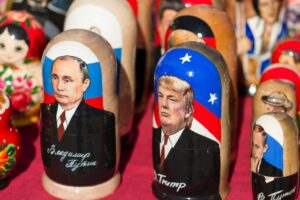
Picture: Untitled by Mark König.
License Unsplash.