





The study “Demystifying an Idiosyncratic Political Movement and Its Legacy: Portrayal of the Young Turks in the British Press, 1908–1914” by Burak Hergüner analyzed quantitatively how the portrayal of the Young Turks movement changed between 1908 and 1914 in the British Press, using data from two leading newspapers: the Daily Mail, and the Daily Telegraph.
The Young Turks movement was a Westernist and Ottomanist movement during its beginning until the Tripoli and Balkan wars, when it switched to Turkism and Westernism. The movement criticized the ‘panislamist’ movement launched by Abdulhamid on the grounds that it widened the gap between different ethnic groups and negatively impacted the unity of the Ottoman state.
Their goal was a model of constitutional monarchy not unlike the British Parlamentarian system. The movement was multicultural and included non-Muslims and non-Turks, seeking to save the Ottoman Empire, a goal that was ultimately a failure.
The relationship between the Young Turks and the British Liberal party was also crucial during the time period, and the Liberal Party under Herbert Henry Asquith was the ruling party. It emphasized free trade policies and anti-protectionism. The party had a good relationship with the Young Turks from 1908 to 1911. However, in 1912 the Liberal Party made a statement that they could no longer support the Young Turks because they did not believe that the Young Turks could carry out reforms.
The theoretical background of the study leaned on the media conformity approach, which posits that the press needs to act independently in democratic countries, but in times of international crisis, it tends to conform with the foreign policies of the respective government.
Also, the author mentions the “CNN effect” – that the media may strongly influence foreign policy decisions in humanitarian crises, as seen in recent history in Bosnia or Rwanda after the Cold War. Thus, this effect is a kind of media conformity in reverse – that foreign policy might conform with the media. It is then a two-way street with media and foreign policy.
The method of the study was a quantitative content analysis, and the materials were from the Daily Mail and the Daily Telegraph, a total of 151 articles from 1908 to 1914. The articles were coded as being either negative, somewhat negative, neutral, somewhat favorable, or favorable. Some articles were also chosen as examples and analyzed more in detail to support the quantitative findings.
According to the results, there was a drastic change in the portrayal of the Young Turks in the media in the time period, occurring as a result of the Tripoli war, in parallel with the policy change towards the Young Turks movement, supporting the media conformity theory.
It then seems that British national interests coincided with the change in portrayal. However, common ideals and tastes resulted in a more positive portrayal, which means that the results do not support the mentality change argument.
In summary, the results support the media conformity theory. The mass-circulation newspapers examined in the study aligned mostly with British foreign policy. Thus, the portrayal of the Young Turks was influenced by the Liberal Party led Britain and their relationship with the Ottoman state.
The article “Demystifying an Idiosyncratic Political Movement and Its Legacy: Portrayal of the Young Turks in the British Press, 1908–1914” by Burak Hergüner is in Media History. (Free abstract).
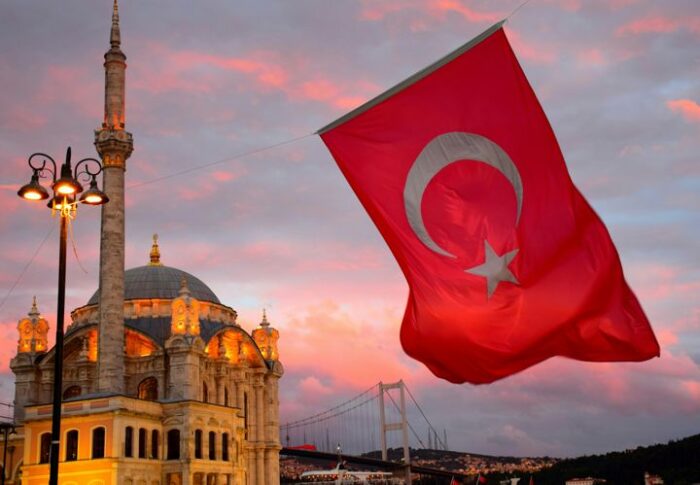
Picture: Büyük Mecidiye Mosque (Ortaköy Mosque) Istanbul, Turkey by Michael Jerrad.
License Unsplash.