




The late 2025 article about Lebanese journalists and press freedom violations and their implications for their professional roles was written by Sally Farhat and Linda Steiner from Phillip Merrill College of Journalism, and Jad Melki from Lebanese American University.
Recently, Lebanon’s press freedom ranking has dropped dramatically – from 98th in 2016 to 130th in 2022, out of 180 countries ranked in the Press Freedom Index. This is despite the fact that the Lebanese media was considered the freest in the Arab world, however, during the term of Michel Aoun (2016-2022) violence against increased and some journalists went into exodus.
This study examines the perceptions that Lebanese journalists have of press freedom violations during 2019-2023. The method to study the issue was interviews, of a total of 17 journalists. The three research questions were: “RQ1: How do Lebanese journalists describe their personal sense of economical, physical, and mental safety in the context of their jobs?
RQ2: How do Lebanese journalists describe the impact on an individual level of their decreased overall safety and the decrease in press freedom on their perception of their jobs and role? RQ3: How do Lebanese journalists working for foreign/international outlets describe their personal sense of safety, compared to those working for domestic/Lebanese outlets?”
Most of the journalists, particularly those working for local news outlets, described their psychological safety as “nonexistent”. Many were traumatized from covering bloody events, as the personal and professional overlapped. Except for one, the journalists working outside Lebanon did not experience this overlap.
Hate speech came mostly from the public: one woman journalist said that she avoided any “provocative” posts – or those she would know as being perceived as such – so that people do not make a deal of it. Even coercion, extortion, public ridicule, sexual harassment, and social media bullying were not unheard of. Two male journalists were also once held at gunpoint.
Physically, most of the journalists said they were not protected by their newsroom. One had their phone taken from them and their shoulder broken. Typically, when working for regional and international outlets, they asked to report from afar or leave the scene when tension rose. Despite the physical danger, several of the participants experienced a “third-person effect” and simply assumed they would be less affected than other journalists.
Economic insecurity was also experienced by many, but ironically the regular journalists experienced more security, as the exodus of journalists resulted in demand for journalistic talent. However, one working now for an international outlet experienced constant fear of losing their job.
The psychological and physical risks created journalistic fatigue and increased self-censorship. There was an overall decrease in their passion for their jobs, a feeling of helplessness and loss of motivation hinted at compassion fatigue. The economic aspects would also create logistical obstacles, and many felt economically threatened.
In conclusion, the psychological pressures affected those still in Lebanon more than the international journalists. Both genders were affected, but women were more likely to take precautionary steps and also experienced more “third-person effect”. All the combined threats impacted Lebanese journalists.
The article “Implications of a Decreasing Sense of Safety on Lebanese Journalists’ Role Perceptions” by Sally Farhat, Linda Steiner, and Jad Melki is in Journalism Practice. (Free abstract).
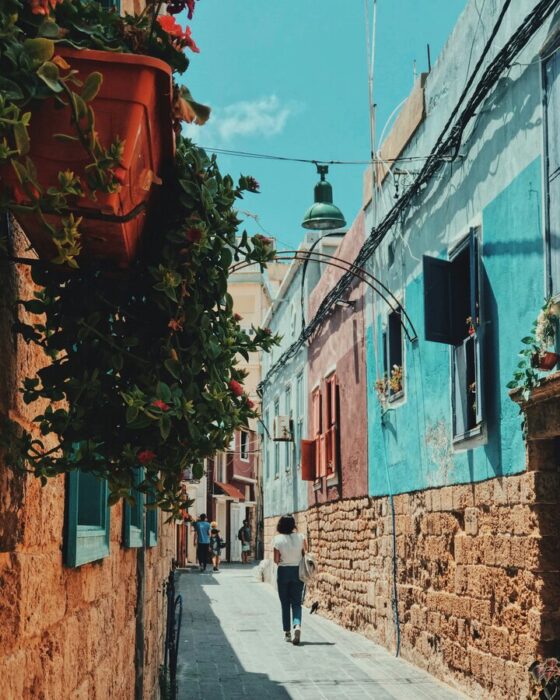
Picture: Unnamed Road, Nabatiyeh El Tahta, Lebanon by Nina Abdel Malak
License Unsplash.