




The study “Viewer Preferences for Publication of Graphic Images of War” by Keith Greenwood from University of Missouri, Lisa Krantz from University of Montana, and Cory MacNeil from University of Missouri interviewed potential viewers of war photographs in newspapers on their beliefs of what sort of photographs should be published about the war in Ukraine.
Graphic images depicting dead people or severe bodily harm – common occurrences in the war in Ukraine – gave editors pause when deciding on their publication. In these cases, editors must balance ethics and what the audience wants to see with the need to tell the full story with pictures.
This study asks the question that many editors fail to by consulting the audience on what they consider their level of comfort to be and what they would actually like to see. To do so, the authors employed a Q methodology to survey US Midwestern university’s population using convenience sampling. The participants ranged from 19 to 82 years old, for a total of 31 participants of which the vast majority identified as female.
The respondents’ attitudes toward the publication of photos varied, and they were categorized into three groups who roughly shared their opinions on what sort of photographs should be published.
The largest group, 15 participants (12 women, 3 men), roughly agreed with the editors on their existing choices and considered it important for the newspapers to share the facts but also respect the people in the photographs. Mainly, they preferred photos that showed emotional connection with the people depicted (by them looking at the camera for example), accepted blood in them, but did not want to see pictures of bodies or parts of bodies of people who died a violent death.
Another group of 8 participants (6 women, 2 men) stressed the responsibility of newspapers to present accurate information, and even stressed that it is important for Americans to see the “ugliness of war” and thus accepted photographs that showed bodies or severe bodily harm. However, they also did not want to see pictures of bodies or body parts devoid of emotion.
The last group of 8 (7 women, 1 man) was the most accepting of photographs depicting bodies or injured people. What they did not want to see were reactions to pain, preferring instead clearly dead people and photographs that showed the indiscriminate nature of killing in war. Thus, their preferences were most at odds with the other two groups.
In conclusion, all the groups agreed that graphic violence should not be shown just for the sake of showing realities of war, and mostly preferred showing the impact of war on the living. The audience’s views mostly were in line with the expectations of the Commission on the Freedom of the Press, but the audience was not homogenous and varied in their views.
The article “Viewer Preferences for Publication of Graphic Images of War” by Keith Greenwood, Lisa Krantz, and Cory MacNeil is in Digital Journalism. (Free abstract).
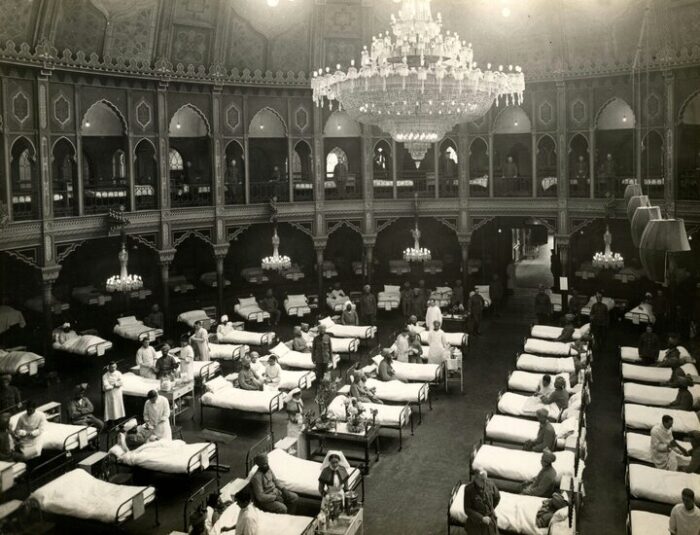
Picture: 1914, World War 1. The Dome Hospital, showing some of the 689 beds in the whole hospital. By British Library.
License Unpslash.