




The study “Practices of objectivity formation in journalism education” by Anders Kruse Ljungdalh from University of Southern Denmark looked at how the norm of objectivity – a journalistic staple – is built into journalism education in the context of a journalism course in Denmark.
Although at times contested, objectivity remains one of the fundamental principles of journalism. It is necessary for filtering information, formation of opinion, and for rational discussion about events. Historically, it has legitimized the privileges of the journalistic profession (Anderson and Shudson, 2019). It is rooted in the late nineteenth century ideal and genre of realism and the epistemological framework of positivism.
For journalism students, objectivity is encountered in the course of teaching, internship, and exams. Further, it is codified in the rules of the profession, and in journalism ethics. It is also embedded in courses dealing with source criticism.
The past literature on journalism education and objectivity has focused on framing the discussion of journalism education more broadly in the light of recent debates, the transition of objectivity associated with positivism and realism and how it is challenged, and the transition from craft to academic norms.
This study focused on three aspects of objectivity in journalism education: representation of situation and problems related to it, procedural problems such as balance and critical inquiry, and the role of the journalist in being impartial and neutral.
For the empirical part, the study consisted of observations of a course during 2021, analyses of interviews with seven students (4 male 3 female) and two teachers, and student’s written exercises. For the observation, the researcher sat back in the class for a total of 20-25 hours of observation and made fieldnotes.
The course had around 30 students in total. They came from various educational backgrounds and most had worked close to journalism. One of the teachers taught a more academic course, while the other taught a skills course.
For the skills teacher. objectivity was a norm that belonged to the genre of news reporting, and was characterized by specific speech acts and codes. The teacher understood objectivity as opposite to subjectivity and objective writing had less personal markers and such. Pointing out errors in students’ writings was to increase their awareness of objectivity.
The other teacher also regarded objectivity as a professional norm. Objective journalism was among several types of journalism, such as constructive journalism inspired by so-called New Journalism. For this teacher, objectivity is not just a cognitive disposition but a set of professional norms to support the journalist.
Students interviewed said that objectivity is on the one hand an utopian ideal, but on the other hand, it is possible to learn how to be objective in some way. But nevertheless, every interview included the disclaimer that objectivity is an impossible dream. Some claimed that media that claims to be objective is being hypocritical and that all media is activist.
As mentioned, however, most students also claimed that it is possible to learn to be objective. When asked how, the students emphasized experience and certain techniques that minimize the problems of subjectivity. The responses of some of the students indicated that they felt a collective, professional responsibility towards the norms of objectivity.
The observed course also included a debate about a controversial issue for the students, and learned and discussed the use of experts as sources – which they considered important, to get the facts right.
The study captured the ‘situated social practice’ of objectivity training. It emphasized how classroom discussions improved the students’ reasoning skills and enabled them to see things from another perspective. The exercises attempted to develop an ability to be critical – i.e. to object – drawing from another meaning of objectivity.
The article “Practices of objectivity formation in journalism education” by Anders Kruse Ljungdalh is in Journalism. (Free abstract).
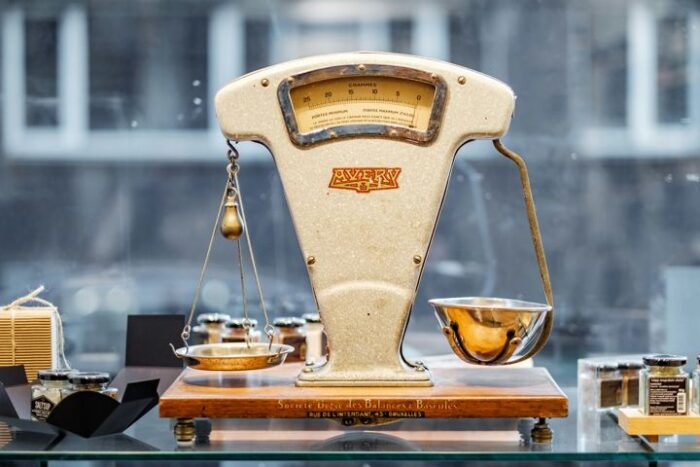
Picture: Antique scale by Piret Ilver.
License Unsplash.