



The study “Disinformation discourse as boundary work in journalism. A comparison between South Africa and France” by Carolyne Lunga and Pauline Renaud from City University of London analyzed how journalists made sense of disinformation during the COVID-19 pandemic in South Africa and France.
The Covid-19 pandemic coincided with another, linked ‘pandemic’ – a pandemic of misinformation and disinformation designed to cause harm. For journalists, this caused a pressure to counter the false stories, while at the same time, having little knowledge about the virus and also having their own work routines disrupted by the virus pandemic.
Many countries responded officially by creating legislation or fact-checking sites to counter the disinformation. For example, in South Africa, spreading disinformation was criminalized with fines or up to 6 months in prison. In France, the government set a temporary website countering false stories.
For this study, semi-structured in-depth interviews were conducted on 20 news professionals, 10 in South Africa and 10 in France. The concepts of interpretation (Magnusson and Marecek 2015) and boundary work (Carlson 2015, 2016) methodologically guided the research.
The media systems, using the taxonomy by Hallin and Mancini (2004), in both France and South Africa fall under the Polarized Pluralist model. However, in France, scholars have noted the growing autonomy of the media from political field, while in South Africa, the system exhibits elements of the Democratic Corporatists and Liberal models.
The research questions for the study were: RQ 1: What are the narratives used by journalists in South Africa and France to discuss pandemic disinformation?
and
RQ 2: Through which mechanisms do journalists in both countries affirm the boundaries of their professional authority in their discourse on disinformation?
Asked about the perception of disinformation, several French interviewees described it is an intimate issue – it affected them personally and they could observe behavioral changes in people around them. They also lamented the ineffectiveness of facts when dealing with anti-vaccine relatives – noting that trust in journalism was lost.
In South Africa, the journalists underlined their important role in combating disinformation, but varied in how it affected them personally. An interviewee mentioned their personal struggle in seeing how the pandemic and the measures affected very poor communities. They nevertheless felt they had to persist in their verification role, despite the fact that some themselves struggled financially.
In both countries, journalists drew attention to the brand new set of challenges facing them and the difficulties they had in overcoming them. In both countries, they had concerns about how the disinformation impacted them.
Many journalists in both countries also saw the pandemic as something of a reflective moment, allowing them to understand the disinformation field much better. Some also reflected on the shortcomings of journalism: even journalists, due to lack of knowledge, sometimes participated in spreading falsehoods.
However, many interviewees were quick to claim that it was not the journalists who were at fault, but some sources may have been untruthful and journalism was balanced – repairing their credibility.
Similarly, many journalists placed the blame for falsehoods outside their own community, denouncing the practices of influencers and such and placing ‘serious’ news a category of its own. Thus, there was also, in addition to the two narratives presented earlier, a confrontation narrative.
The journalists discourses about themselves, as per the second research question, reflected boundary work when considering what is journalism. For example, a French interviewee did not consider people writing for France Soir as colleagues (France Soir is known to spread conspiracy theories). Another interviewee concurred about France Soir.
In South Africa, the journalists emphasized the role of external actors such as the Department of Health or key universities as credible sources. Thus, they were more focused in inclusion of external actors than exclusion of internal actors.
Verification and fact-checking were also considered important and intrinsic to the field in both countries. In South Africa, journalists saw themselves as ‘truth mediators’ and reaffirmed their watchdog role.
Journalistic norms were seen as something that could be renegotiated during the pandemic. Accuracy was seen as paramount, while objectivity was sometimes less emphasized – with interviewees stressing honesty rather than objectivity in France. Similarly, South Africa, ‘truth’ was seen as more important than ‘objectivity’.
In conclusion, struggles with boundaries played out differently in South Africa and France. In France, interviewees stressed exclusion more of divergent actors in the field and out of it, while in South Africa, inclusion of credible sources was more in the front.
The article “Disinformation discourse as boundary work in journalism. A comparison between South Africa and France” by Carolyne Lunga and Pauline Renaud is in Journalism. (free abstract).
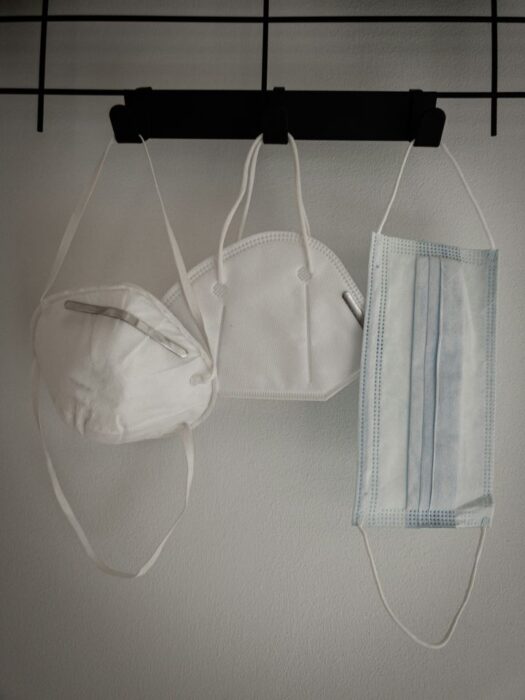
Picture: Indispensable masks against Covid-19. By Isaac Quesada.
License Unpslash.