





The study “The uncompromising way: Several lessons from homeless journalists” by Vojtěch Dvořák from Masaryk University looked at participatory journalism by unhoused individuals in Czech Republic and Colorado and the implications for professional journalists.
According to the author, journalism has always had a radical role in the society: pursuing absolute equality and freedom for every member of the democratic society. However, this social responsibility may lead to paternalism and reinforce the dominant role of professional journalists. Thus, an overhaul is required.
This study delves into media participation framed as a social dialogue, focusing on Arnstein’s (1969) tri-partite concept of citizen power while studying participatory community journalism. The study itself was a 3-year ethnographic research project focusing on the creation of participatory community newspapers with people experiencing homelessness.
The research took place in Brno, Czech Republic (2020–2022), and Denver, Colorado (2023). At first, the author was looking into the potential of media and journalism practices as a tool for empowerment for unhoused people. The secondary motivation was to look at the potential of the said people in challenging dominant discourses around homelessness.
There were a total of 26 participants, 14 in participants, 4-6 at any given time. In Denver, there were 12, with 2-3 attending the sessions at time. The participants were recruited from 2 day centers through approximately 250 short interviews. Others joined after seeing a poster or being informed of the study by the centers’ staff.
The author ended up pondering on the question: “is true equality between professional journalists and marginalized populations attainable?”, as despite noble intentions, the process is inherently biased, with journalists essentially exhausting the voice of the homeless for the greater good of the community.
However, a possible solution was unhoused individuals interviewing each other. In these situations, the power dynamic ended up being egalitarian and the conversations were natural and unforced. The unhoused also voiced frustrations about typical journalism not understanding the experience of homelessness.
One possible objection remains: the unhoused individuals might have biases arising from their own stigma or injustices faced by other unhoused individuals. However, most participants were able to develop critical awareness, but other remained oblivious, necessitating effort to navigate them together.
The ultimate goal was to provide the participants with Arnstein (1969) terms “citizen control”, but the author found out that discovering and sharing on power and partnership. The participants were able to better define and understand the world, while they in turn excelled in shedding light on the issue of homelessness in the Western world.
Writing and sharing via expressive writing was found to have multiple health benefits, as also found out in past studies (Costa and Abreau, 2018; Cooper, 2014). This was found out here, but even more so: despite the initial difficulties in the task, the writing provided the individuals with something sorely missing in their lives – a sense of accomplishment.
When discussing the amplification of the voices of the unhoused, the author noted that many might be initially suspicious of sharing their experiences due to past negative experiences of being manipulated, misused, or dismissed. Nevertheless, with a safe and supported environment, the voices become liberated, and the significance is that the voices may contribute to dismantling the barriers of invisibility and dehumanization.
The journalism practiced by the unhoused individuals differed from mainstream media’s sensationalism and attracting readers, being more about emphasizing the ordinary aspects of their lives: they sought to remind the readers that they were human beings with dreams and aspirations first, homeless second.
However, there is a potential problem in emphasizing the ordinary: it might not adequately address how harsh life in the streets really is and undermine the demands for additional support, or create an impression that homelessness is a matter of personal choice. Still, by emphasizing the human aspects of their lives, the community journalists challenged preconceived notions and stereotypes.
The author also insists that as powerholders, the professional journalists and researchers must give up some of that power to open up new paths for transformative change. This is a path to true empowerment for the marginalized individuals and even themselves.
In conclusion, the author advocates for a deeper exploration of the so-called “uncompromising way” within media structures and professional journalism, which may entail sharing power. The benefit of this is twofold: it equalizes the power relations and provides a deeper understanding of the issue.
The article “The uncompromising way: Several lessons from homeless journalists” by Vojtěch Dvořák is in Journalism. (open access).
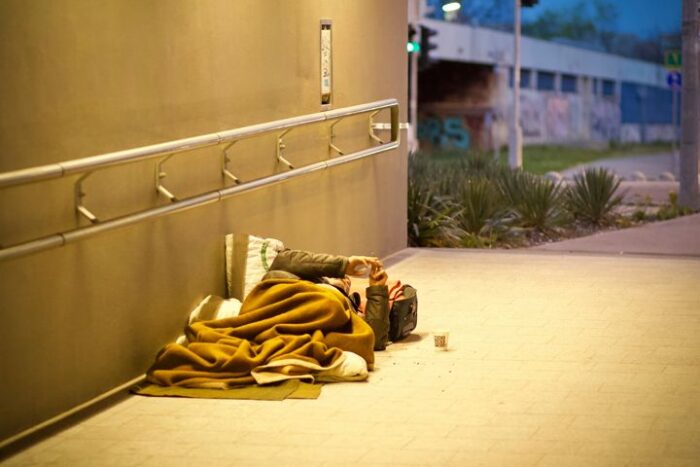
Picture: Untitled by Mihály Köles.
License Unsplash.