





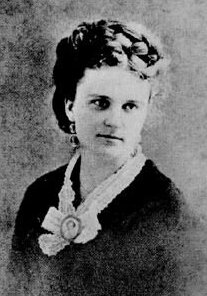
The American author Kate Chopin, the author of “The Awakening” was the topic of this study on how she was covered in mainstream media in her time and shortly after her death, by Yelena Dzhanova from Temple University.
When Chopin’s magnum opus The Awakening came out in 1899, the critics panned it as frivolous, downplayed the female protagonist, and framed it through a male-centric lens – this despite the novel’s daring exploration of the questions of women’s independence and autonomy. This abruptly changed after her death in 1904 and literary scholars nowadays consider her a groundbreaking American author.
In the center of the book is the protagonist, Edna Pontellier, who rejects marriage and motherhood in favor of art and engaging in marital infidelity. In hindsight, the book was daring and should have catapulted Chopin into the American literary canon, instead, she was largely unrecognized in her time. Today, it is often assigned reading in classrooms in the United States.
This study links the treatment of Chopin to the historical exclusion of women writers – which led some authors like Mary Ann Evans to publish under male pseudonyms like in the aforementioned case George Eliot. Contemporary authors like J.K. Rowling was also told to publish under her initials to disguise her gender (and unmentioned here, she also publishes detective stories under the pen name Robert Galbraith).
According to the author, archival data suggest women novelists were more prolific than men prior to mid-to late-1800s, but when men stepped into the role of ‘cultural brokers’ they began critically advocating for other men. Indeed, the contrast of the reception of the likes of Mark Twain to Chopin in their lifetimes is illustrative of the period – even when some critics in the press panned Twain, he still had the title of “the American writer”.
The turn of the century was also a period of upheaval for women – dubbed the Progressive Era and having issues like the women’s suffrage movement. During this time, Chopin switched from writing male-palatable books to her magnum opus The Awakening.
43 ads, book reviews, and obituaries about The Awakening were analyzed for the article from 1899 to 1915, using terms “Kate Chopin” and “Awakening” to identify useful materials.
Ad copy writers typically cast Chopin as exclusively to women or girls and reduced her novel to sentimentality and hysteria. In doing this, she was reduced from primary literary offerings to a gendered hierarchy – suggesting that it was not universally relatable.
The plot was also frequently oversimplified and the protagonist was considered unrelatable due to her flaunting of cultural norms. The book was called “pretentious”, suggesting that “it has to deal with the heart and wiles of a woman, and ends tragically” – using gendered tropes. A general sense of discomfort with the character of Edna permeated the reviews. The feminist themes were dismissed.
Several reviews viewed the book from the lens of a man, seeing the suicide of Edna a as a byproduct of her relation with her lover Robert Lebrun – a reading at odds with the novel itself, as her dissatisfaction did not concern her lover. Another review portrayed the husband as the protagonist – revealing a bias toward male characters.
In addition, geographic framing was utilized to erase the feminist themes, suggesting that the novel was about “Creole life” in New Orleans, and therefore implying that the depiction of “Southern life” is more interesting than the protagonist. This is despite the fact that ample evidence exists that Chopin sought to foreground the protagonist rather than the scenery.
And suddenly, after the death of Chopin, the tone changed – slowly at first. In the beginning, her book was termed as having “met approval”. This was a lukewarm praise, but nevertheless far different than the reception she had met when alive. It was also termed in St. Louis Republic as being “favorably known to St. Louis and St- Louisians”.
This was not yet a total change in tone. However, within a few years, the reception dramatically changed. This pivot occurred along with the Progressive Era, and according to Jean Marie Lutes media outlets started to shift their focus to female consumers. Another suggestion by Hume is that obituaries generally were celebratory and particularly dead women were praised for feminine virtues. Nevertheless, the change in tone was abrupt and noticeable, as the study shows.
The article ““Stories for Girls”: Gendered Newspaper Reception and the Reputation of Kate Chopin” is in American Journalism. (Free abstract).
Picture: Kate Chopin from Wikipedia.